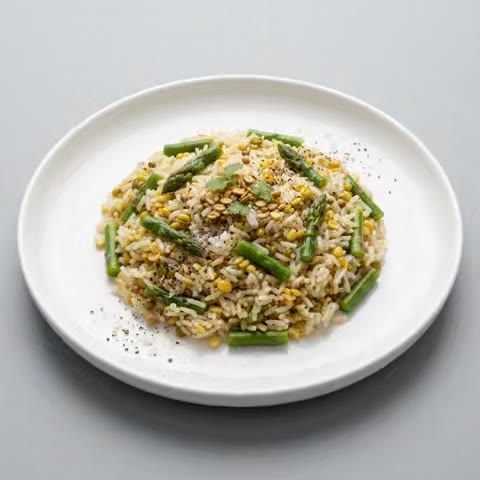
Ingredients & Ayurvedic Properties
| Ingredient | Weight | Ayurvedic Profile |
|---|---|---|
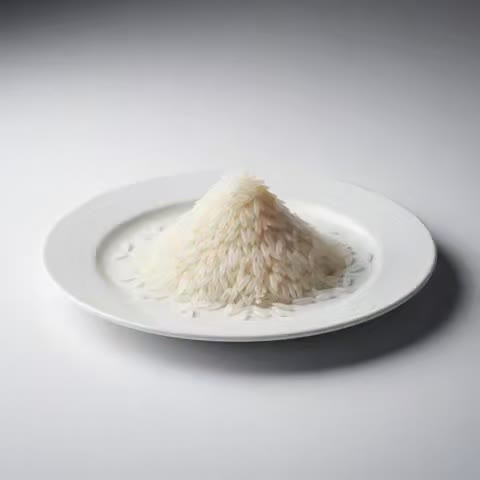 White rice, rinsed and drained | 210 g | Sweet · Cooling |
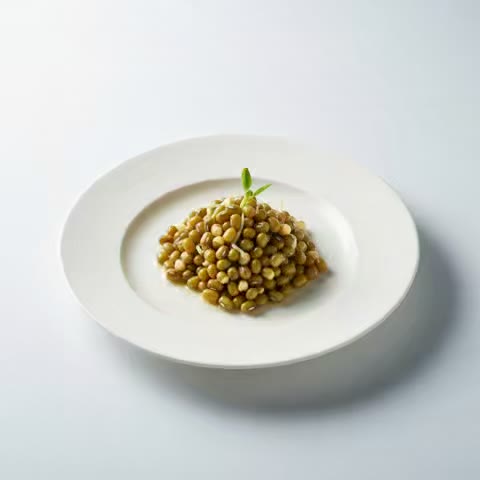 Mung beans, split and rinsed | 165 g | Sweet, Astringent · Cooling |
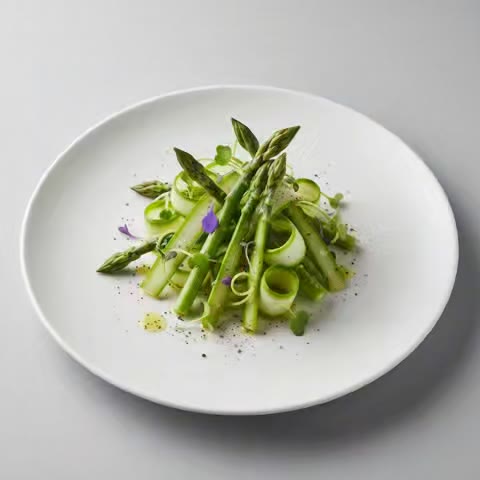 Asparagus, trimmed and cut into short pieces | 300 g | Sweet, Bitter, Astringent · Cooling |
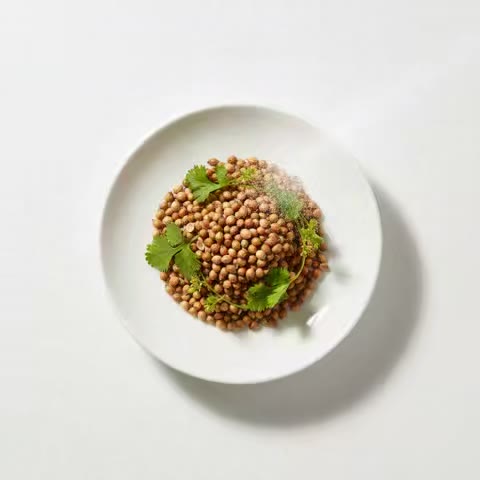 Coriander seeds, ground | 6 g | Astringent, Bitter, Sweet · Cooling |
 Ghee, for finishing | 16 g | Sweet · Cooling |
 Rock salt, finely ground | 4 g | Salty · Cooling |
| Water, freshly boiled | 1100 g | Whole culinary ingredient |
Step-by-Step Preparation
- Prepare 1100 ml (about 4 1/2 cups) hot water before starting Grishma Asparagus Mung Rice; keep one small ladle in reserve in case the base tightens early.
- Simmer the rice and mung until the grains are nearly soft. Maintain low heat for 20–22 minutes, stirring every 4 minutes, until a grain pressed between two fingers has no chalky center.
- Add the asparagus and coriander and cover only until the stems yield. Maintain steady low heat for 4–6 minutes, stirring every 5 minutes, until a knife tip enters the thickest stem with only slight resistance.
- For Grishma Asparagus Mung Rice, inspect the main component at minute 17; rotate the pot and add 30–60 ml hot water only if the base is tightening before it is tender.
- Season the meal and fold in ghee without dulling the green pieces. Leave the pan off the flame for 6 minutes, then taste and correct the final balance before serving at the stated temperature.
- Rest Grishma Asparagus Mung Rice 6 minutes covered off the burner; check the final consistency and serve it warm without prolonged holding.
Dosha Modifications & Seasonal Guidance
Vaidya Culinary Note (original lacto-vegetarian recipe developed for the R3 regional and practical cooking collection)
Grishma Asparagus Mung Rice is composed for grishma with seasonal texture, produce, and seasoning Vata: serve warm and keep enough moisture in the grains. Pitta: moderate pungency and avoid hard browning. Kapha: favor the vegetable portion and use only the stated fat.
USDA Nutrition Facts for Grishma Asparagus Mung Rice
| Nutrient | Per 100g | Per Serving (1 serving (450g)) |
|---|---|---|
| Energy (Calories) | 86 kcal | 389 kcal |
| Protein | 3.4 g | 15.4 g |
| Total Carbohydrates | 15.9 g | 71.5 g |
| Dietary Fiber | 2.1 g | 9.6 g |
| Total Sugars | 0.9 g | 4.2 g |
| Total Fat | 1.1 g | 5.2 g |
| Calcium | 23.6 mg | 106.4 mg |
| Iron | 1.53 mg | 6.90 mg |
| Magnesium | 24.3 mg | 109.3 mg |
| Phosphorus | 57.1 mg | 257.0 mg |
| Potassium | 165 mg | 745 mg |
| Sodium | 91 mg | 409 mg |
| Zinc | 0.48 mg | 2.18 mg |
| Copper | 0.15 mg | 0.69 mg |
| Manganese | 0.25 mg | 1.15 mg |
| Selenium | 3.0 µg | 13.4 µg |
| Vitamin C | 1.4 mg | 6.5 mg |
| Vitamin A (RAE) | 14.3 µg | 64.6 µg |
| Vitamin E | 0.29 mg | 1.30 mg |
| Vitamin K | 7.8 µg | 35.3 µg |
| Thiamin (Vitamin B1) | 0.15 mg | 0.67 mg |
| Riboflavin (Vitamin B2) | 0.05 mg | 0.23 mg |
| Niacin (Vitamin B3) | 0.87 mg | 3.89 mg |
| Vitamin B6 | 0.07 mg | 0.31 mg |
| Folate (DFE) | 111.0 µg | 500.0 µg |
| Choline | 12.5 mg | 56.3 mg |