Ingredients & Ayurvedic Properties
| Ingredient | Weight | Ayurvedic Profile |
|---|---|---|
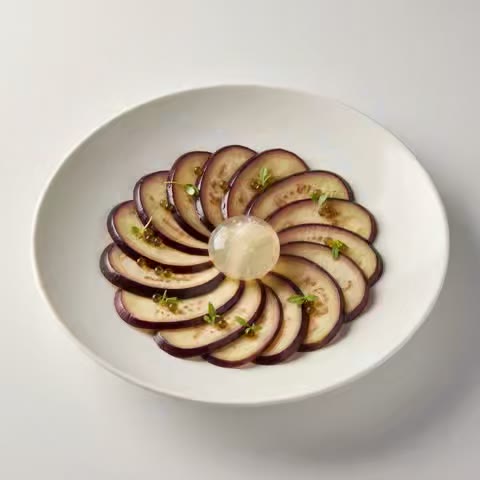 Eggplant, cut into thick wedges | 450 g | Pungent, Bitter, Sweet · Heating |
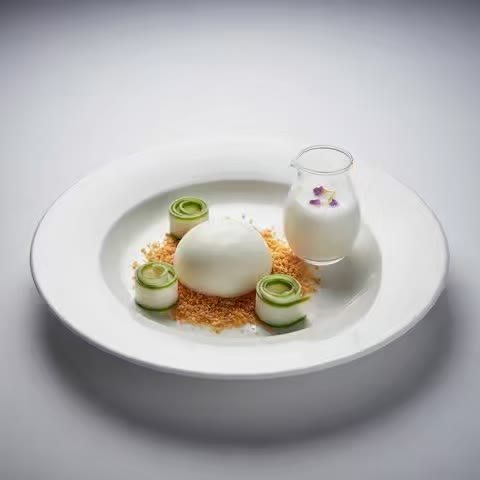 Fresh coconut, finely grated | 90 g | Sweet · Cooling |
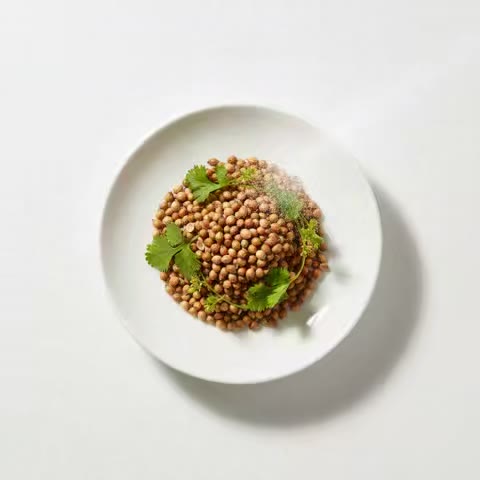 Coriander seeds, whole | 8 g | Astringent, Bitter, Sweet · Cooling |
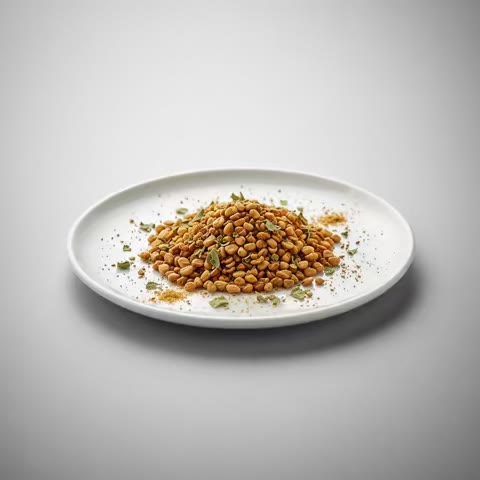 Fenugreek seeds, whole | 2 g | Bitter, Pungent · Heating |
 Tamarind pulp, diluted | 32 g | Sour, Sweet · Heating |
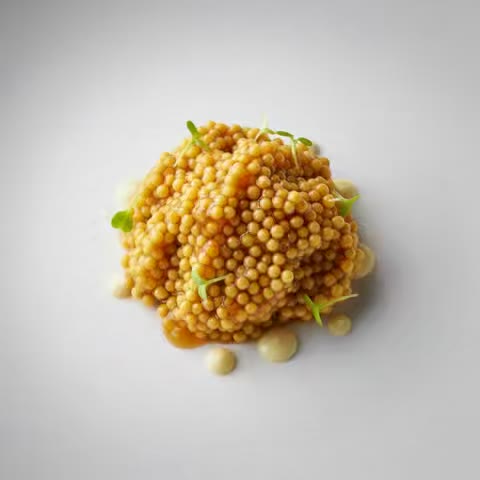 Mustard seeds, ready for tempering | 4 g | Pungent · Heating |
 Coconut oil, divided | 22 g | Sweet · Cooling |
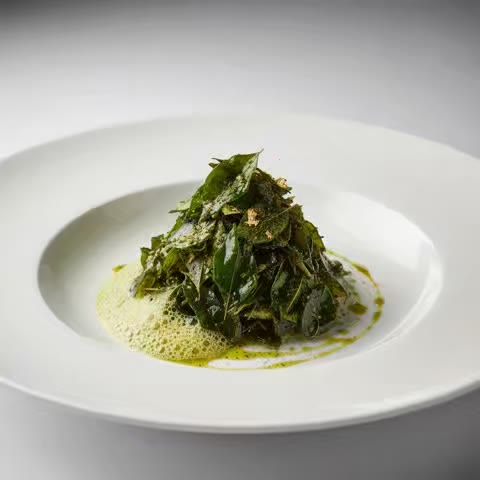 Curry leaves, torn | 2 g | Bitter, Pungent · Heating |
 Rock salt, finely ground | 4 g | Salty · Cooling |
| Water, freshly boiled | 520 g | Whole culinary ingredient |
Step-by-Step Preparation
- Bring 520 ml (about 2 1/4 cups) water to a boil in a separate kettle and hold it hot, covered, so Kerala Eggplant Theeyal never loses its simmer.
- Brown the coconut slowly with coriander and fenugreek until nutty. Give the spices about 30 seconds before adding the larger pieces, then continue over low heat for 2–3 minutes, moving the pan often, until the raw aroma is gone.
- Grind the cooled mixture with a little hot water. Work in 3 short pulses, pausing between them so the mixture stays cool and retains the intended texture.
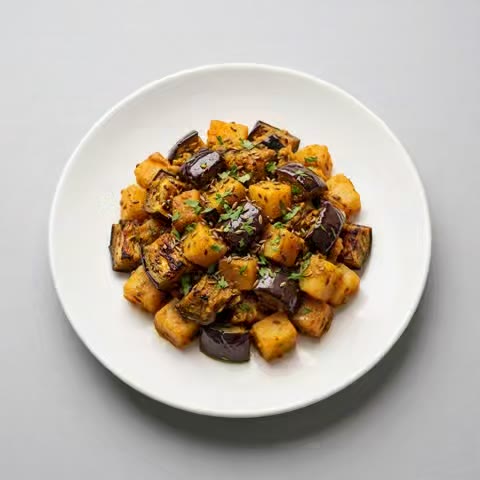
- Sear the eggplant wedges in part of the oil, pour in the diluted tamarind. Use medium-high heat for 4–6 minutes, turning once, until the cut faces are browned while the centers remain firm enough for simmering.
- Simmer until the flesh yields. Maintain medium-low heat for 10–12 minutes, stirring every 5 minutes, until a thin knife slides through the largest piece without resistance.
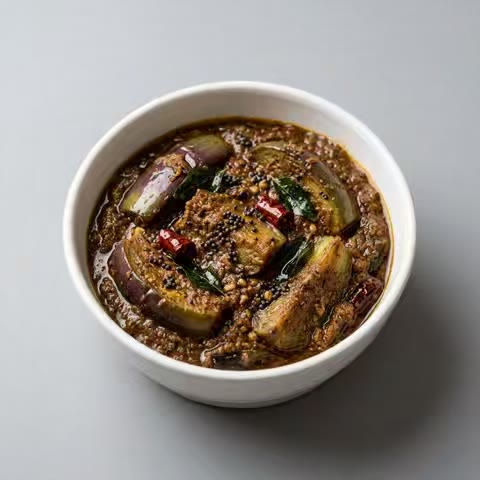
- Stir in the roasted paste, reduce to a glossy gravy, and crown it with mustard and curry leaves crackled in the remaining oil. Maintain gentle medium heat for 8–10 minutes, stirring every 3 minutes, until a spoon drawn across the base leaves a trail that closes slowly.
- Rest Kerala Eggplant Theeyal for 5 minutes covered off the burner; stir once gently, check the final consistency, and serve warm without prolonged holding.
Dosha Modifications & Seasonal Guidance
Vaidya Culinary Note (original lacto-vegetarian recipe developed for the R3 regional and practical cooking collection)
Roasted coconut and tamarind make theeyal deep and warming rather than light Vata: serve a small portion beside soft rice and add a spoon of ghee. Pitta: reduce the tamarind and omit extra chilies. Kapha: keep the coconut portion modest and emphasize black pepper.
USDA Nutrition Facts for Kerala Eggplant Theeyal
| Nutrient | Per 100g | Per Serving (1 serving (283g)) |
|---|---|---|
| Energy (Calories) | 67 kcal | 189 kcal |
| Protein | 1.0 g | 2.7 g |
| Total Carbohydrates | 5.9 g | 16.8 g |
| Dietary Fiber | 2.4 g | 6.9 g |
| Total Sugars | 3.0 g | 8.5 g |
| Total Fat | 4.9 g | 14.0 g |
| Calcium | 16.0 mg | 45.3 mg |
| Iron | 0.57 mg | 1.61 mg |
| Magnesium | 15.2 mg | 43.1 mg |
| Phosphorus | 27.5 mg | 78.0 mg |
| Potassium | 150 mg | 427 mg |
| Sodium | 142 mg | 403 mg |
| Zinc | 0.21 mg | 0.60 mg |
| Copper | 0.09 mg | 0.24 mg |
| Manganese | 0.12 mg | 0.33 mg |
| Selenium | 1.9 µg | 5.3 µg |
| Vitamin C | 1.4 mg | 4.0 mg |
| Vitamin A (RAE) | 0.7 µg | 1.9 µg |
| Vitamin E | 0.23 mg | 0.66 mg |
| Vitamin K | 2.9 µg | 8.1 µg |
| Thiamin (Vitamin B1) | 0.04 mg | 0.10 mg |
| Riboflavin (Vitamin B2) | 0.02 mg | 0.07 mg |
| Niacin (Vitamin B3) | 0.39 mg | 1.10 mg |
| Vitamin B6 | 0.04 mg | 0.12 mg |
| Folate (DFE) | 11.9 µg | 33.6 µg |
| Choline | 4.5 mg | 12.8 mg |