Classical Ayurvedic Profile & Preparation
Seer fish (surmai) is a traditional Ayurvedic animal valued for its sweet taste and heating potency.
Traditional Preparation (Samskara)
Firm steak fish; marinate with turmeric and lime, cook quickly. Moderate frequency due to its position in the food chain.
Classical Provenance: Regional coastal tradition; marine matsya class.
Synergistic Combinations (Samyoga)
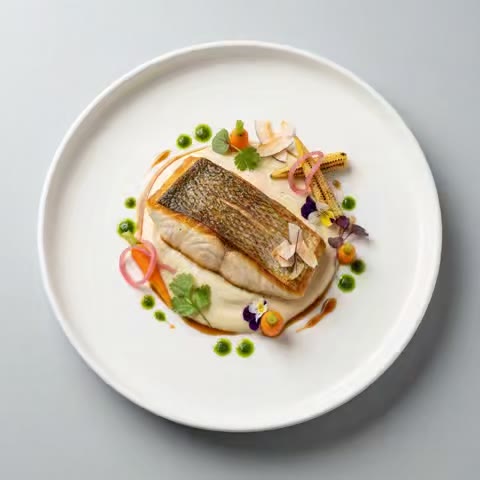
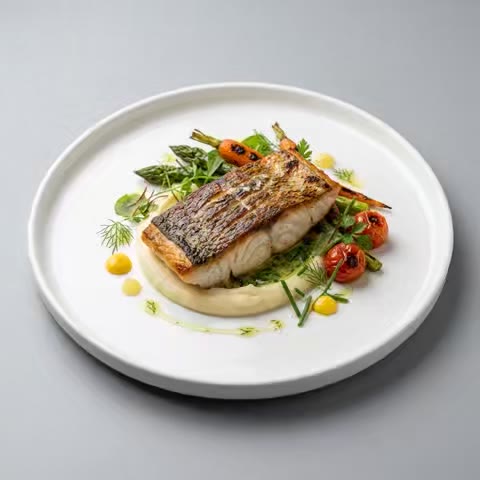
- pan-fried steaks with turmeric-lime marinade
- Konkani curries
Contraindications & Viruddha Āhāra (Food Incompatibilities)
- Contraindication: fish allergy
- Contraindication: pregnancy (mercury caution for large predatory fish)
- Incompatible pairing (Viruddha): with milk (classical fish-milk viruddha)
Verified USDA Nutrition Facts for Seer fish (surmai)
Complete macronutrient, vitamin, and mineral profile per 100 grams and per 3 oz (85g):
| Nutrient | Per 100g | Per Serving (3 oz) |
|---|---|---|
| Energy (Calories) | 136 kcal | 116 kcal |
| Protein | 22.3 g | 18.9 g |
| Total Carbohydrates | 0 g | 0 g |
| Dietary Fiber | 0 g | 0 g |
| Total Sugars | 0 g | 0 g |
| Total Fat | 5.2 g | 4.4 g |
| Calcium | 9.8 mg | 8.4 mg |
| Iron | 0.41 mg | 0.35 mg |
| Magnesium | 36.7 mg | 31.2 mg |
| Phosphorus | 302.0 mg | 256.7 mg |
| Potassium | 473 mg | 402 mg |
| Sodium | 35 mg | 30 mg |
| Zinc | 0.74 mg | 0.63 mg |
| Copper | 0.08 mg | 0.07 mg |
| Manganese | 0.01 mg | 0.01 mg |
| Selenium | 32.6 µg | 27.7 µg |
| Vitamin C | 0 mg | 0 mg |
| Vitamin A (RAE) | 81.9 µg | 69.6 µg |
| Vitamin E | 0.67 mg | 0.57 mg |
| Vitamin K | 0.7 µg | 0.6 µg |
| Thiamin (Vitamin B1) | 0.03 mg | 0.03 mg |
| Riboflavin (Vitamin B2) | 0.07 mg | 0.06 mg |
| Niacin (Vitamin B3) | 3.46 mg | 2.94 mg |
| Vitamin B6 | 163.00 mg | 138.55 mg |