Classical Ayurvedic Profile & Preparation
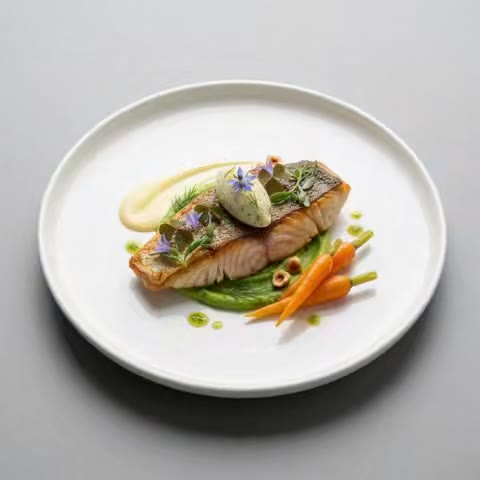
Rohita is the one fish classical texts single out as wholesome — the least aggravating of fish, strengthening and sweet.
Traditional Preparation (Samskara)
Freshwater fish are classically lighter than marine; cook fresh, spiced with turmeric and ginger, never combined with milk.
Classical Provenance: Charaka Samhita Sutrasthana 27 (rohita); Bhavaprakasha Mamsa varga.
Synergistic Combinations (Samyoga)
- light mustard-free curries with ginger
- steamed with lime and turmeric
Contraindications & Viruddha Āhāra (Food Incompatibilities)
- Contraindication: fish allergy
- Contraindication: skin conditions with high pitta (excess)
- Incompatible pairing (Viruddha): with milk (major classical viruddha)
- Incompatible pairing (Viruddha): with honey (traditional caution)
Verified USDA Nutrition Facts for Rohu (freshwater fish)
Complete macronutrient, vitamin, and mineral profile per 100 grams and per 3 oz (85g):
| Nutrient | Per 100g | Per Serving (3 oz) |
|---|---|---|
| Energy (Calories) | 102 kcal | 87 kcal |
| Protein | 19.7 g | 16.8 g |
| Total Carbohydrates | 0 g | 0 g |
| Dietary Fiber | 0 g | 0 g |
| Total Sugars | 0 g | 0 g |
| Total Fat | 2.4 g | 2.0 g |
| Calcium | 39.4 mg | 33.5 mg |
| Iron | 1.04 mg | 0.88 mg |
| Magnesium | 26.5 mg | 22.6 mg |
| Phosphorus | 200.0 mg | 170.0 mg |
| Potassium | 303 mg | 258 mg |
| Sodium | 36 mg | 30 mg |
| Zinc | 0.80 mg | 0.68 mg |
| Copper | 0.05 mg | 0.04 mg |
| Manganese | 0.04 mg | 0.03 mg |
| Selenium | 51.5 µg | 43.8 µg |
| Vitamin C | 0 mg | 0 mg |
| Vitamin A (RAE) | 3.9 µg | 3.3 µg |
| Vitamin E | 2.40 mg | 2.04 mg |
| Vitamin K | 1.0 µg | 0.9 µg |
| Thiamin (Vitamin B1) | 0 mg | 0 mg |
| Riboflavin (Vitamin B2) | 0.04 mg | 0.03 mg |
| Niacin (Vitamin B3) | 2.33 mg | 1.98 mg |
| Vitamin B6 | 240.00 mg | 204.00 mg |