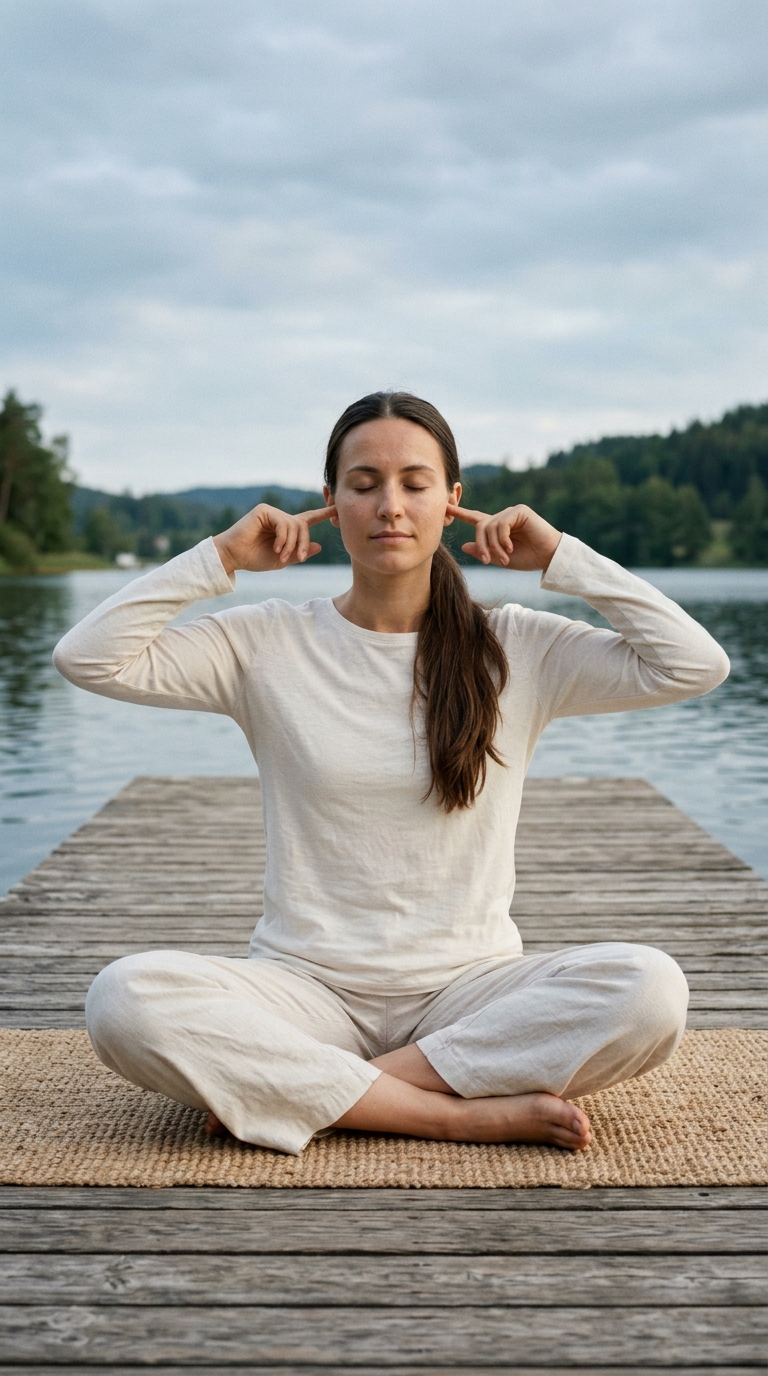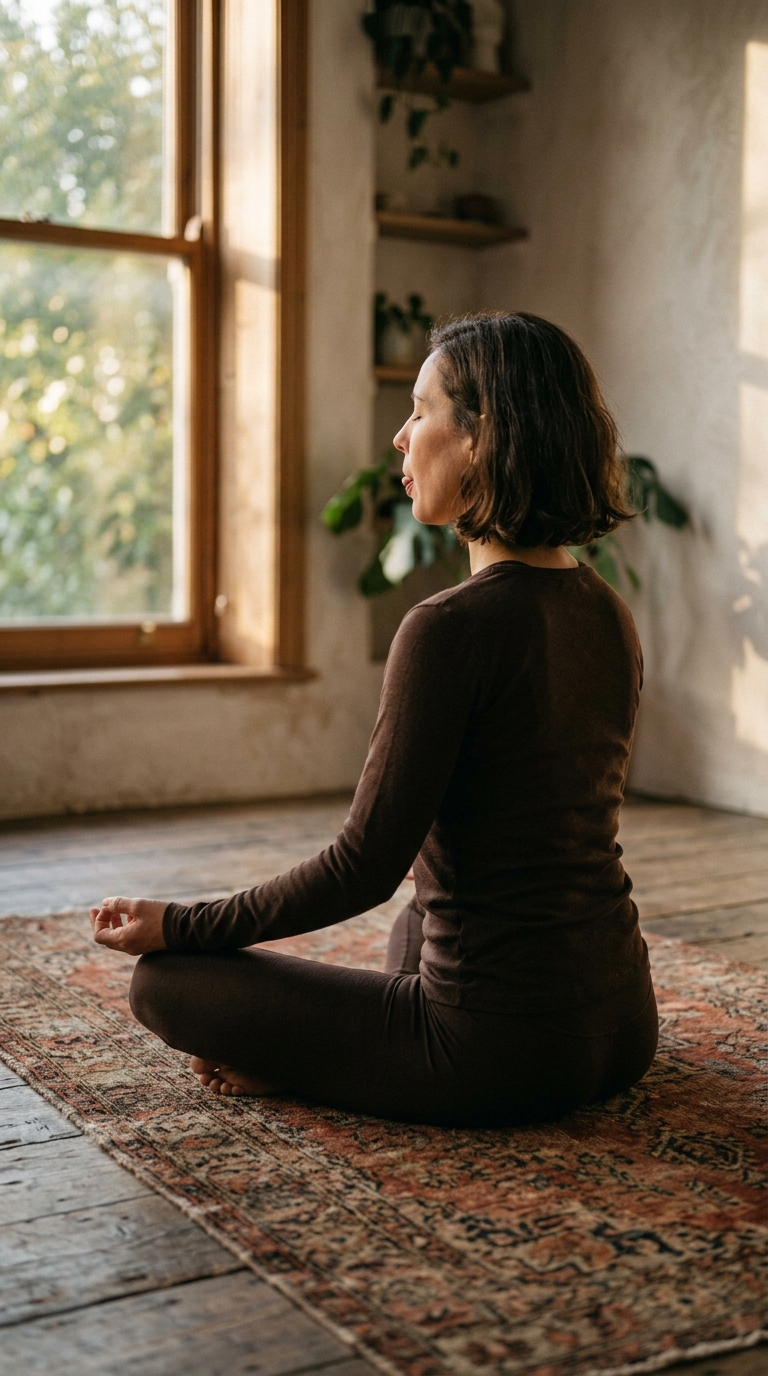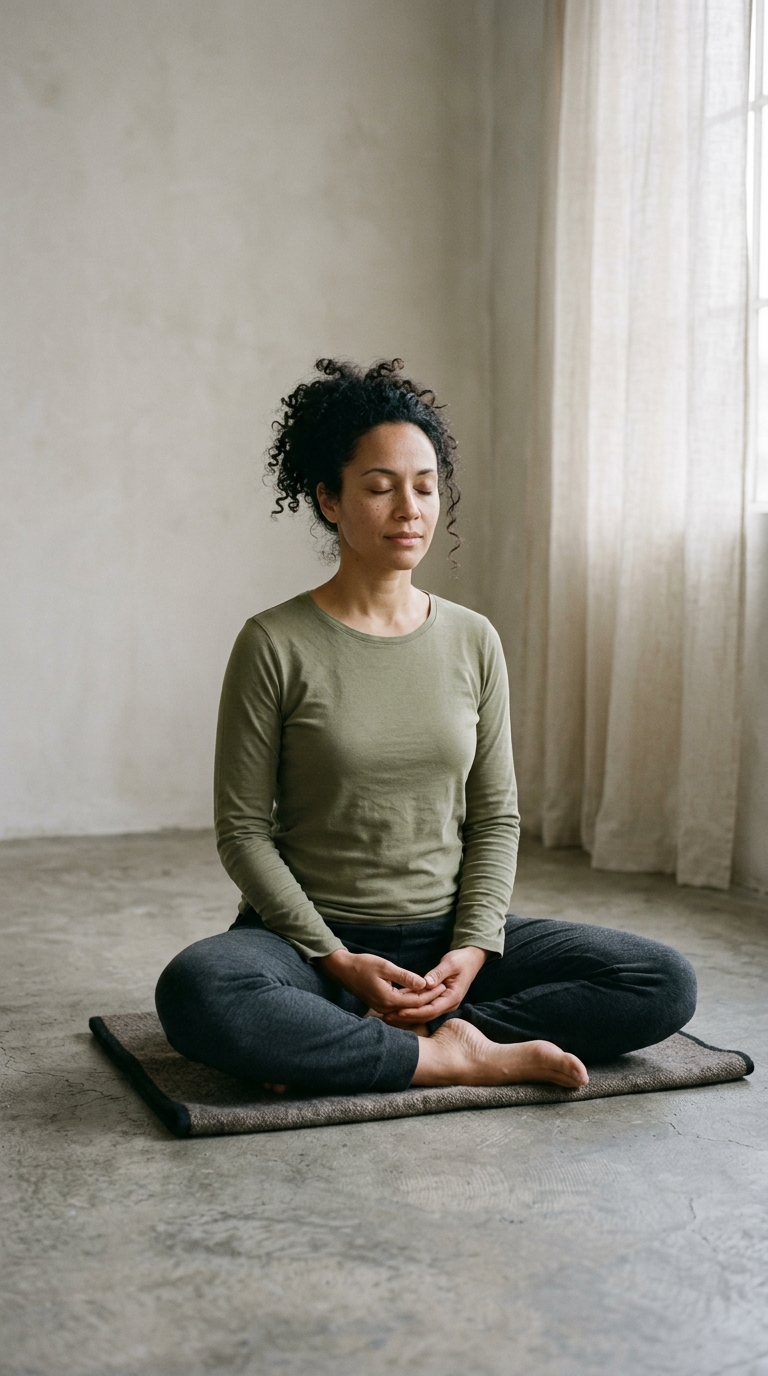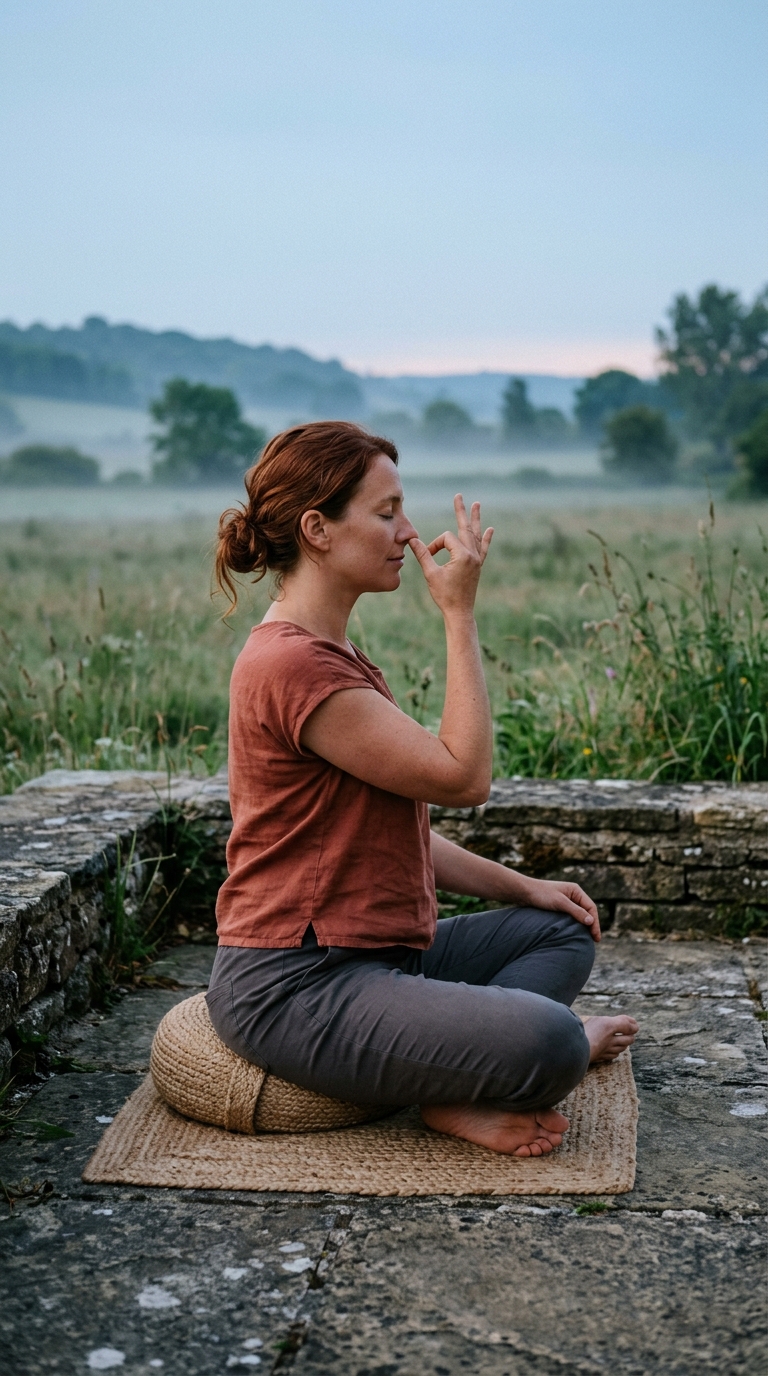
Ujjayi is the soft, ocean-like breath you may hear around a room during a vinyasa or Ashtanga class. It comes from a slight narrowing at the back of the throat, which makes the breath audible and a little slower.
It is one of the most widely taught yogic breathing techniques, and also one of the easiest to overdo. This guide covers where it comes from, how modern teachers use it, a gentle way to learn it, and what has and has not been studied.
Ujjayi in the Hatha Yoga Pradipika
Ujjayi appears in the fifteenth-century Hatha Yoga Pradipika as one of eight kumbhakas, or breath-retention practices (2.44). The Sanskrit of verse 2.51 describes closing the mouth and slowly drawing air in through the nostrils; Pancham Sinh's 1914 translation describes the air touching from the throat to the chest and making a noise as it passes. The text then has the practitioner hold the breath and release it through the left nostril (2.52), and says ujjayi may be performed in all conditions, even while walking or sitting (2.53).
So the classical technique is a seated retention practice with a particular breathing route. The modern version used throughout a flowing class — continuous ujjayi on both inhale and exhale, without holds — is a modern usage associated with vinyasa-based styles. Both use the name; they are not identical practices.
What is happening in the throat
Researchers describe ujjayi as a form of resistance breathing. A 2013 study by Mason and colleagues explains that it reduces airflow and, during the exhale, increases pressure in the chest through a slight contraction of the muscles around the glottis, the opening between the vocal cords. The sound is a by-product of that narrowing.
The key word is slight. The sound should be soft enough that someone next to you can hear it but someone across the room cannot. A loud, rasping breath usually means the throat is squeezed harder than needed.
Learning the sound gently
Many teachers use a two-step approach: find the throat shape with the mouth open, then keep it with the mouth closed.
- Sit comfortably. Breathe normally for a few rounds.
- With the mouth open, exhale as if fogging a mirror: a soft 'haaa' made at the back of the throat, not with the lips.
- Repeat a few times, noticing the slight narrowing in the throat that makes the sound.
- Now close the mouth and exhale through the nose while keeping the same narrowing. The 'haaa' becomes a quieter hiss.
- When the exhale is comfortable, try keeping a gentle version of the sound on the inhale too.
- Practise for a minute or two, then return to ordinary breathing. Lengthen the time only if it stays easy.
Common problems and simple fixes
Most difficulties come from making the throat narrowing too strong.
- Sound is loud or harsh: reduce the narrowing until the breath is barely audible.
- Throat feels tight, dry or sore: stop, swallow, breathe normally; next time make the sound softer and practise for less time.
- Feeling short of air: the breath has become too slow or too restricted. Let go of the sound and breathe freely.
- Jaw or face clenching: the effort has spread. Soften the jaw and let the tongue rest.
- Sound disappears in harder poses: that is common. Many teachers suggest letting the breath stay free in demanding moments rather than forcing the sound.
Using ujjayi in a flowing class
In many vinyasa and Ashtanga classes, ujjayi acts as a pacing tool: you move as you inhale or exhale, and the audible breath makes it easier to notice when you are rushing or holding your breath. That is a practical function rather than a health claim.
It is optional. If continuous ujjayi makes a class harder to follow, breathing quietly through the nose, or through the mouth when you need more air, is perfectly acceptable. A teacher who insists on the sound regardless of how you feel is prioritising form over your comfort.
What research has measured
Mason and colleagues studied 17 healthy young adults new to yoga, comparing slow breathing at six breaths per minute with and without ujjayi. Ujjayi raised blood oxygen saturation to a similar degree as plain slow breathing but gave a smaller improvement in baroreflex sensitivity, a measure of how heart rate responds to blood pressure changes, and did not lower blood pressure. The authors concluded that slow breathing with equal inhale and exhale times was the simplest and most effective of the patterns they tested.
That is one small laboratory study, not evidence about long-term health. It does suggest that the slowing, rather than the throat sound itself, may account for much of what people notice. If the sound is a struggle, plain slow breathing is a reasonable alternative.
Sources & Classical References
- Hatha Yoga Pradipika, translated by Pancham Sinh (1914), chapter 2 — Public-domain translation including the kumbhaka list and the verses on ujjayi. Verse numbers can differ slightly between editions.
- Mason et al. (2013), Cardiovascular and respiratory effect of yogic slow breathing in the yoga beginner — Laboratory study describing ujjayi as resistance breathing and comparing it with plain slow breathing.
- NCCIH: Yoga: Effectiveness and Safety — General safety guidance for yoga, including breathing practices.