Bhramari is a breathing practice in which you hum on the exhale, producing a sound often compared to a bee. The name comes from bhramara, a Sanskrit word for a large bee.
Because it uses a sound most people can already make, it is often one of the more approachable traditional practices. This guide covers the basic pattern, common variations, how to keep it comfortable and what can and cannot be said about its effects.
The classical description
The Hatha Yoga Pradipika lists bhramari among its eight kumbhakas (2.44). The verse describing it is short: in Pancham Sinh's 1914 translation, the practitioner fills the lungs with force while making a noise like a bee (Sinh writes 'wasp'), and lets the breath out slowly making the same sound; the text says this produces a kind of ecstasy in the minds of advanced yogis (2.68).
The classical version therefore includes a sound on both the inhale and the exhale, and sits in a chapter about breath retention. Most modern beginner instructions are simpler: an ordinary inhale through the nose and a hummed exhale.
A basic modern pattern
This is a common modern beginner pattern; follow your teacher's version if it differs.
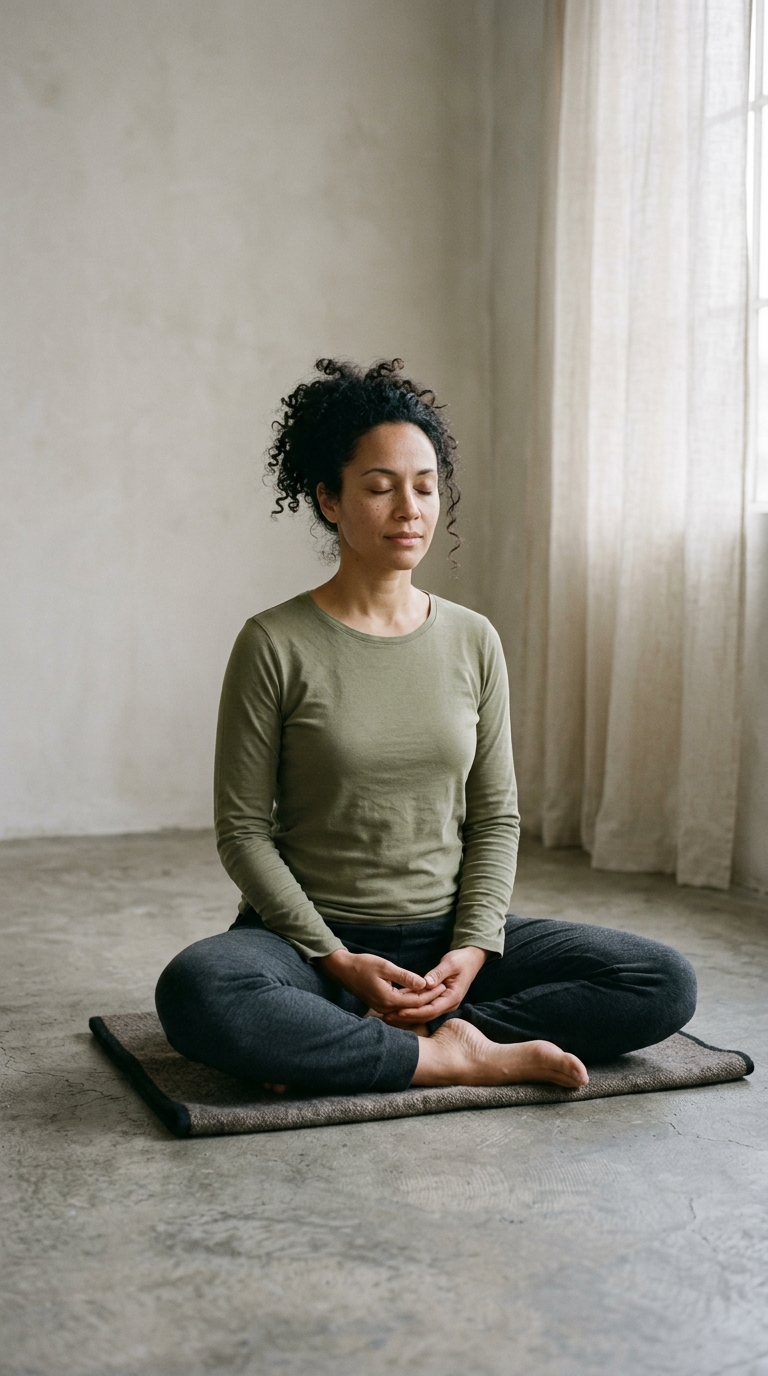
- Sit comfortably with the back supported if you like. Relax the jaw and let the lips close lightly, teeth slightly apart.
- Breathe in through the nose at a comfortable pace.
- Breathe out slowly through the nose while making a steady 'mmm' sound, like a low hum.
- Let the hum end naturally when the exhale is finished. Do not squeeze out the last of the breath.
- Take one or two ordinary breaths if you need them, then repeat.
- After a few rounds, sit quietly for a moment before moving on.
Common variations
Teachers add optional details to the basic hum; none is essential.
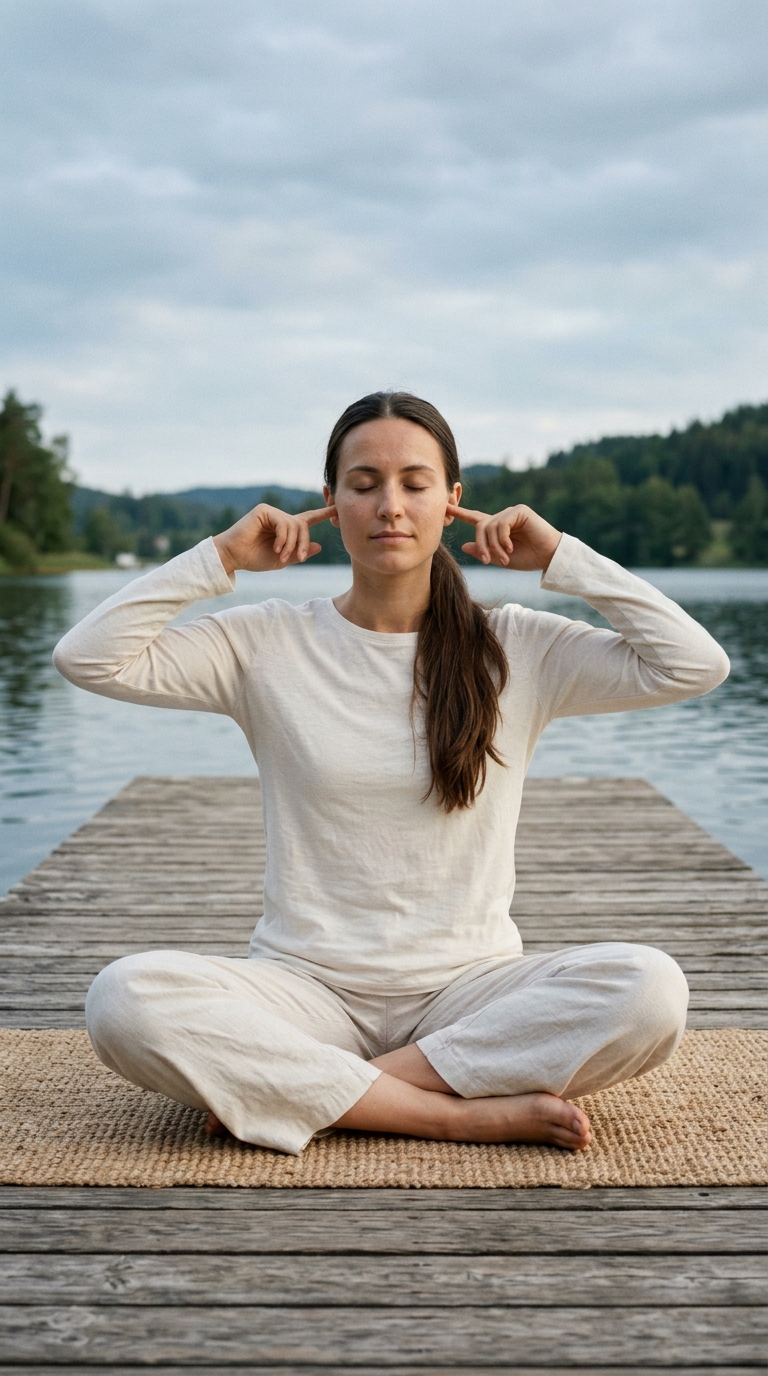
- Ears covered: many teachers suggest gently closing the ear flaps with the thumbs or index fingers, which makes the hum feel louder inside the head. Press lightly on the cartilage flap, not into the ear canal. If it feels uncomfortable or claustrophobic, leave the ears open.
- Hands over the face: some traditions place the remaining fingers lightly over the eyes and face. This is optional and adds nothing essential.
- Pitch: a lower or higher hum is a matter of comfort. Find a pitch that does not strain the voice.
- Eyes open or closed: either is fine. Open eyes may be preferable if closing them makes you feel unsteady or uneasy.
Keeping it comfortable
The hum should be soft and sustainable. A loud or forced hum tightens the throat and shortens the breath. If you notice buzzing in the lips or face, that is normal; strain in the throat or jaw is a sign to hum more quietly.
Lengthening the exhale is part of the practice, but it should happen gradually. If each round leaves you needing a gasp, the exhale is too long. Shorten it, or take a free breath between rounds. Stop and breathe normally if you feel lightheaded, tingling or uneasy.
A blocked nose makes the nasal hum harder. You can hum with the lips softly closed and breathe in through the mouth, or set the practice aside until you can breathe comfortably through the nose.
What can be said about its effects
Many sources describe bhramari as calming, and a long, slow, audible exhale is something people often find settling. That is a description of experience, not a clinical finding. Research on yogic breathing in general is limited by small studies and weak methods; a 2019 narrative review by Saoji and colleagues called for larger, better-designed studies. Bhramari specifically has been studied far less than slow breathing in general, and claims that it treats any condition are not supported by good evidence.
The traditional description in the Hatha Yoga Pradipika speaks of ecstasy in the mind of the yogi. That belongs to the spiritual aims of the text, and it is worth reading as such rather than as a promised effect.
Where it fits in a session
Bhramari is commonly placed near the end of a yoga practice, before a final rest or a period of quiet sitting. Because the sound gives the mind something simple to attend to, some people use a few rounds as a transition into meditation. It works in a chair as well as on the floor, and does not require any particular posture beyond one you can stay in comfortably.
Sources & Classical References
- Hatha Yoga Pradipika, translated by Pancham Sinh (1914), chapter 2 — Public-domain translation including the kumbhaka list and the verse on bhramari. Verse numbers can differ slightly between editions.
- Saoji, Raghavendra and Manjunath (2019), Effects of yogic breath regulation: a narrative review of scientific evidence — Review of yogic breathing research and its methodological limits.
- MedlinePlus: Hyperventilation — Symptoms of over-breathing, useful for recognising when to stop.