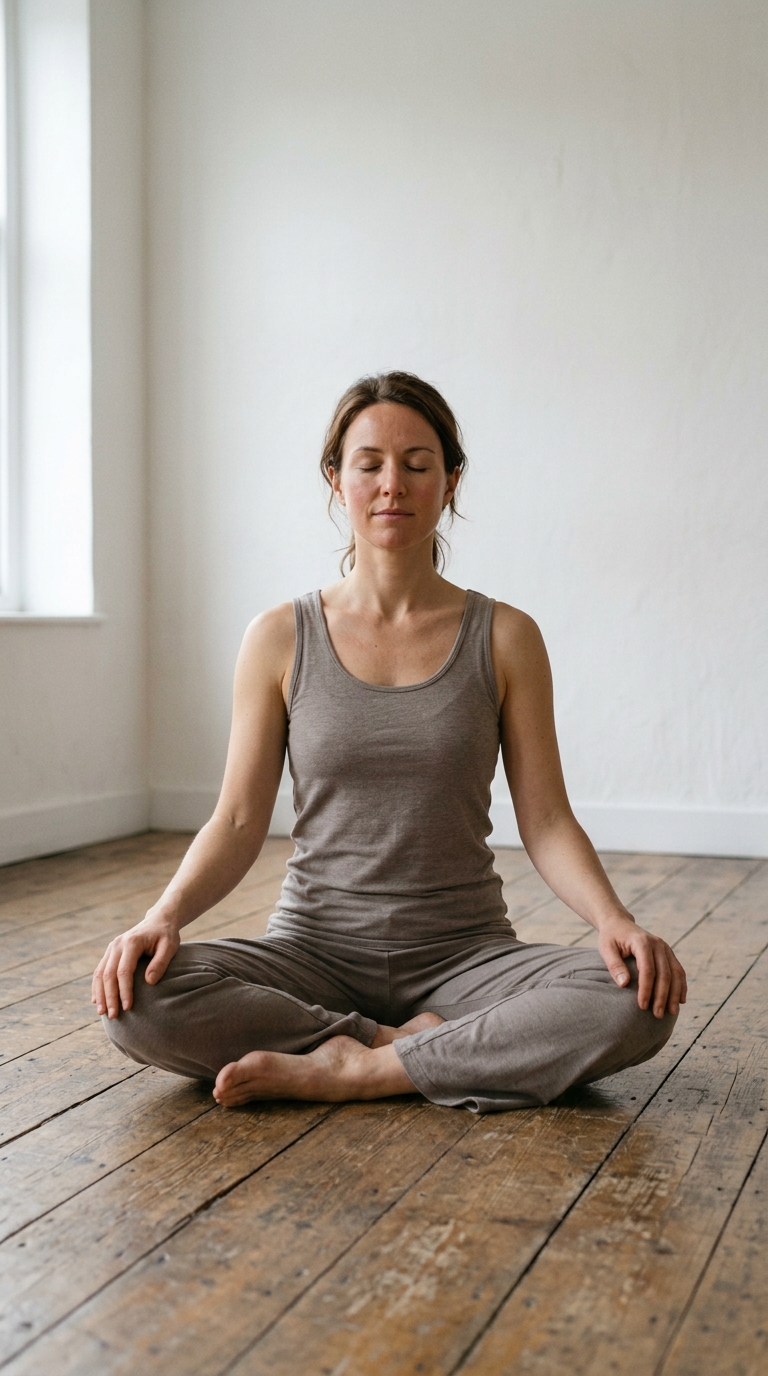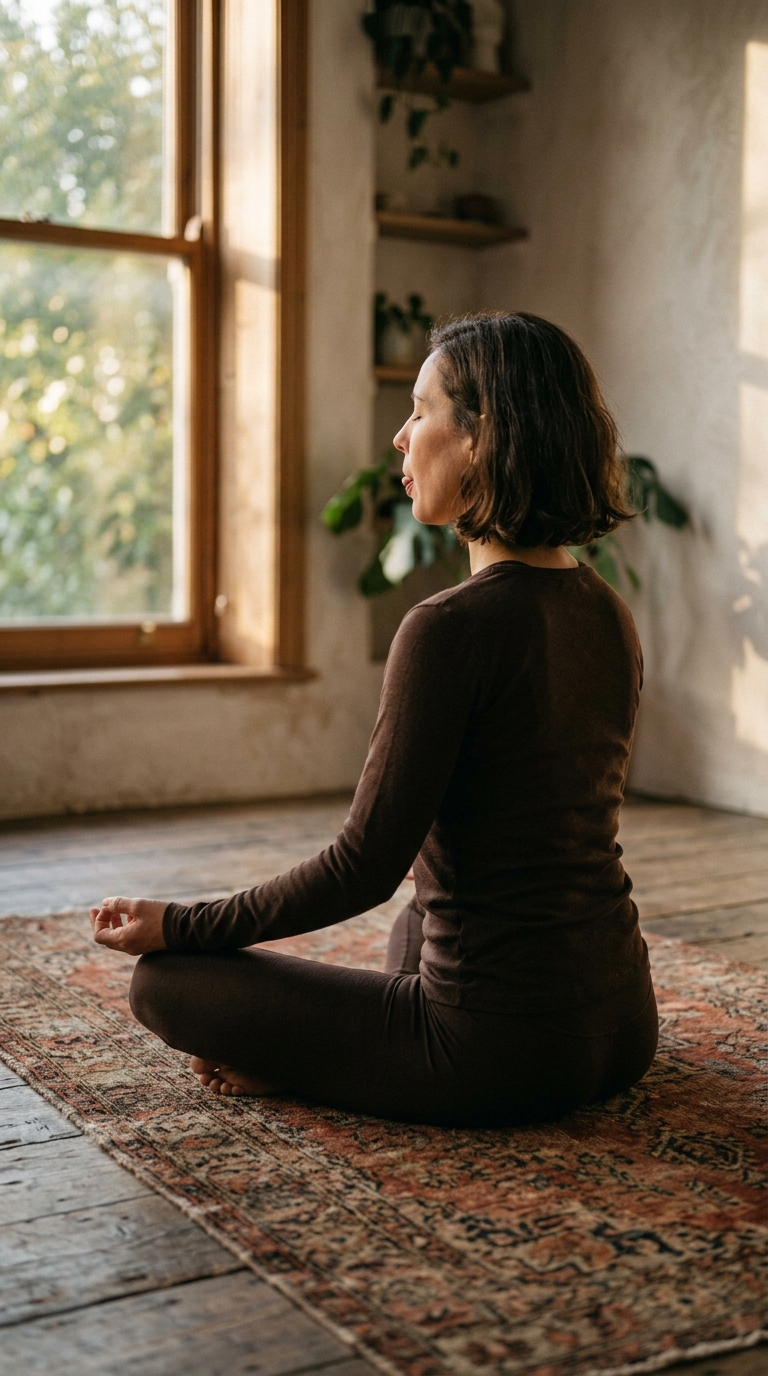
Some breathing exercises keep the breath moving: in, out, in, out, at a set pace. Others add a pause, holding the breath in or out for a count. In yoga the pause is called kumbhaka; in popular wellness guides it appears in patterns such as box breathing and 4-7-8.
Adding a hold changes an exercise more than it may seem. This guide explains the difference, compares the common patterns, and sets out the safety points that apply to any breath hold.
Two families of breathing exercise
Continuous breathing patterns change pace or proportion but never stop the breath: slow, even breathing; a longer exhale than inhale; breathing to a count. Retention patterns insert deliberate pauses after the inhale, after the exhale, or both.
The practical difference is that a hold asks you to override the urge to breathe. Short, comfortable holds feel like a natural pause. Longer holds bring air hunger, and recovering from them can lead to gasping or over-breathing. That is why classical texts treat retention as something to build slowly, and why most beginner instruction leaves it out.
Kumbhaka in the yoga tradition
In the Yoga Sutras, Patanjali describes the movement of breath as external, internal or motionless, regulated by place, time and number (II.50). The Hatha Yoga Pradipika goes further, naming eight kumbhakas (2.44) and distinguishing sahita kumbhaka, retention combined with deliberate inhale and exhale, from kevala kumbhaka, which Pancham Sinh's translation describes as 'simply confining the air with ease' without them (2.71–2.73). The same chapter warns that breath must be brought under control slowly, like taming a wild animal (2.15).
In that tradition, retention is central and advanced. It is not usually what a modern beginner class means by breathing practice.
Popular patterns that include holds
These patterns differ in where the holds fall and how long they last.
- Box breathing: inhale, hold, exhale and hold again for equal durations. In a 2023 study by Balban and colleagues, the duration of each phase was set for each participant and was typically 3 to 10 seconds.
- 4-7-8 breathing: popularised by physician Andrew Weil. In his description, you breathe out fully, then inhale through the nose for a count of four, hold for seven, and exhale through the mouth with a whoosh for eight, for four breaths.
- Classical retention: holds after the inhale (and sometimes the exhale), often within alternate nostril breathing, with ratios that a teacher increases over time.
- Cyclic hyperventilation with retention: rapid deep breaths followed by a long hold on the exhale. This is the most intense pattern of the group and the one with the clearest safety concerns.
What a comparison study found
Balban and colleagues assigned volunteers to five minutes a day for about a month of one of four practices: cyclic sighing (a pattern that emphasises long exhales, with no holds), box breathing, cyclic hyperventilation with retention, or mindfulness meditation. Cyclic sighing produced a larger increase in daily positive mood than mindfulness meditation, and a larger reduction in breathing rate.
The study was done remotely with self-reported adherence, the groups were small, and there was no follow-up after the month. It does not show that holds are necessary for a breathing practice to feel calming. A continuous, exhale-focused pattern did at least as well in that study.
Safety rules for any breath hold
These apply whatever the tradition or app.
- Never practise breath holds in or near water. The American Red Cross, YMCA of the USA and USA Swimming describe hyperventilation before underwater swimming and extended breath-holding in water as dangerous and potentially deadly, regardless of depth. CDC investigators explain that over-breathing first delays the body's signal to come up for air.
- Do not combine rapid breathing with long holds unless a qualified teacher is supervising. Over-breathing before a hold delays the urge to breathe, which is the mechanism behind blackouts in water.
- Practise sitting or lying where you cannot fall, not standing, and never while driving.
- Keep holds short enough that the next breath is calm rather than a gasp.
- Stop and breathe normally if you feel dizzy, tingling, short of air or anxious.
- Ask a clinician before practising holds if you are pregnant or have a heart or lung condition, high blood pressure, epilepsy or a history of panic.
Choosing between them
If you are new to breathing exercises, a continuous pattern — slow, even breathing, or a gently lengthened exhale — gives you most of what people seek from breathwork with less to go wrong. You can always add a brief, comfortable pause later and notice whether it adds anything for you.
If a recording or app includes holds, you can follow the pacing and simply keep breathing through the hold counts. That turns a retention pattern into a continuous one without abandoning the session. If you want to learn classical kumbhaka, do it with a teacher who can see you and build it over time.
Sources & Classical References
- Hatha Yoga Pradipika, translated by Pancham Sinh (1914), chapter 2 — Public-domain translation of the verses on kumbhaka and gradual practice. Verse numbers can differ slightly between editions.
- Patanjali's Yoga Aphorisms, translated by Swami Vivekananda (1896), Wikisource — Public-domain translation of Yoga Sutra II.50.
- Balban et al. (2023), Brief structured respiration practices enhance mood and reduce physiological arousal, Cell Reports Medicine — Remote comparison of cyclic sighing, box breathing, cyclic hyperventilation with retention and mindfulness meditation.
- CDC MMWR (2015): Fatal and Nonfatal Drowning Outcomes Related to Dangerous Underwater Breath-Holding Behaviors — Explains why hyperventilation and breath-holding before swimming are dangerous.
- Dr. Weil: Breathing Exercises: Three To Try — Andrew Weil's own description of the 4-7-8 breath.
- MedlinePlus: Hyperventilation — Symptoms of over-breathing.