{'heading': 'What is Kapalabhati and who should skip it?', 'summary': 'Kapalabhati ("skull-shining" breath) is a traditional Hatha Shatkarma (cleansing kriya) and pranayama technique that pairs short, brisk nasal exhalations driven by the lower abdominal wall with completely passive, silent inhalations. Because rapid abdominal pumping spikes intra-abdominal pressure and can lower arterial carbon dioxide (hypocapnia) if overdone, it has strict contraindications and is not a beginner relaxation breath.', 'bullets': ['Core mechanic: Only the exhale is active (a gentle inward snap of the lower belly); the inhale happens automatically as you relax the abdominal wall.', 'Who must avoid it: Anyone who is pregnant, postpartum/recovering from abdominal surgery, or living with uncontrolled hypertension, heart disease, glaucoma, epilepsy, hernia, or panic disorder.', 'Tempo & round limits: Keep the pace moderate (about 1 exhale per second, 15–25 strokes per round) rather than racing at 2 strokes per second.', 'Gentler alternative: Substitute slow 1:1 nasal diaphragmatic breathing or unheld Nadi Shodhana whenever you want steady focus without pressure spikes.']}
Kapalabhati ("skull-shining" breath) is a traditional Hatha Shatkarma (cleansing kriya) and pranayama technique that pairs short, brisk nasal exhalations driven by the lower abdominal wall with completely passive, silent inhalations. Because rapid abdominal pumping spikes intra-abdominal pressure and can lower arterial carbon dioxide (hypocapnia) if overdone, it has strict contraindications and is not a beginner relaxation breath.
Core mechanic: Only the exhale is active (a gentle inward snap of the lower belly); the inhale happens automatically as you relax the abdominal wall.
Who must avoid it: Anyone who is pregnant, postpartum/recovering from abdominal surgery, or living with uncontrolled hypertension, heart disease, glaucoma, epilepsy, hernia, or panic disorder.
Tempo & round limits: Keep the pace moderate (about 1 exhale per second, 15–25 strokes per round) rather than racing at 2 strokes per second.
Gentler alternative: Substitute slow 1:1 nasal diaphragmatic breathing or unheld Nadi Shodhana whenever you want steady focus without pressure spikes.
Active Exhale and Passive Inhale: How Kapalabhati Differs from Bhastrika
In classical Hatha texts (`Hatha Yoga Pradipika` and `Gheranda Samhita`), `Kapalabhati` is listed among the six cleansing actions (`Shatkarma` / `Kriya`) as well as an energizing breathing technique. Unlike ordinary breathing—where the diaphragm contracts actively on the inhale and recoils passively on the exhale—Kapalabhati reverses the muscular emphasis.
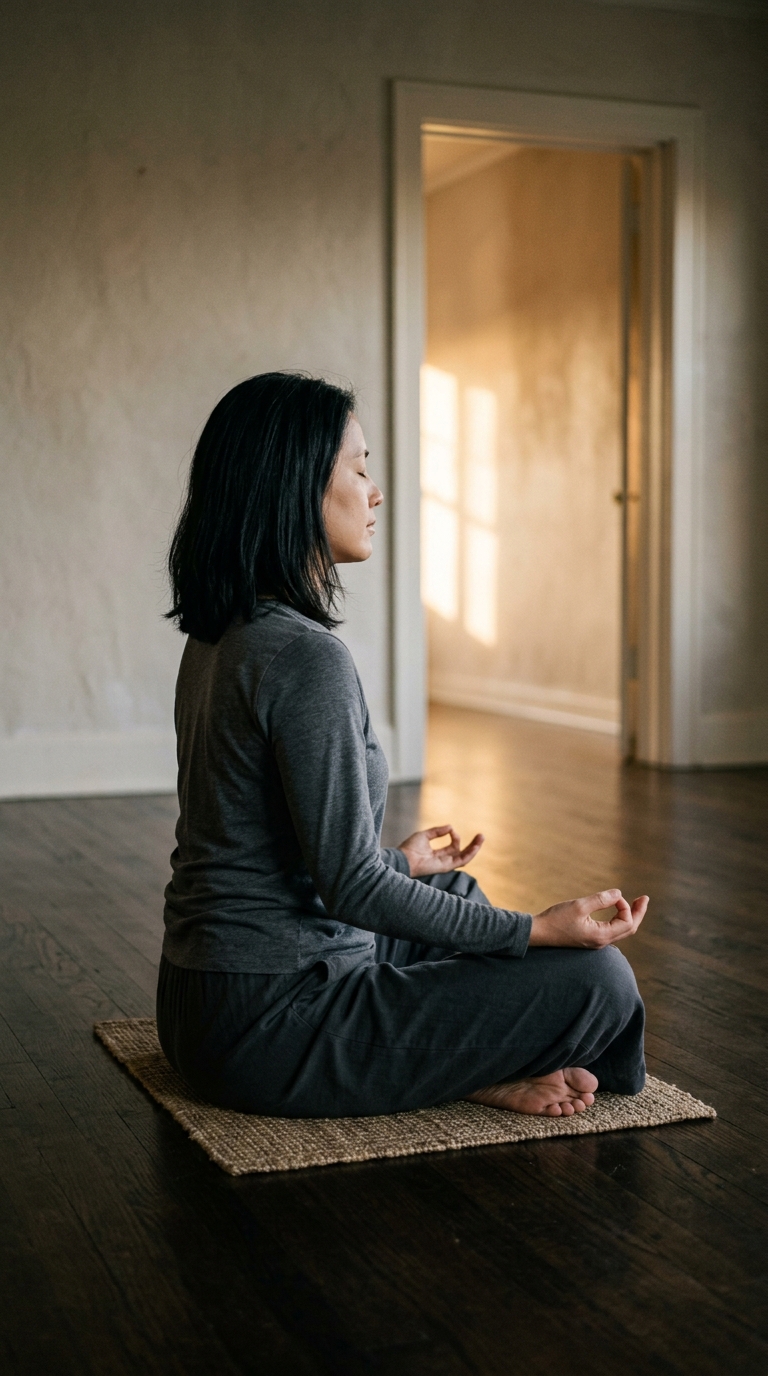
Sitting tall with an elongated spine and stable ribcage, you take a partial inhale, then contract the transverse abdominis and rectus abdominis inward and slightly upward to expel a short puff of air through both nostrils. Immediately after that crisp exhale, you soften the belly completely; elastic recoil of the abdominal wall and diaphragm draws air back in with zero active sniffing. This distinguishes Kapalabhati from `Bhastrika` ("bellows breath"), which forces both the inhalation and the exhalation.
- Chest and shoulders stay still: If your collarbones, shoulders, or face bounce up and down, you are using accessory neck muscles instead of the lower abdominal wall.
- Avoid "paradoxical" reverse pumping: Never push the belly outward on the exhale and suck it in on the inhale; place one palm over your navel to verify the belly draws inward as air leaves the nose.
- Keep the pace unhurried: A steady cadence of 1 stroke per second (60 strokes/min) for 15 to 20 strokes is far easier to coordinate than rapid-fire pumping.
Physiological Effects and Strict Contraindications
Every brisk abdominal contraction transiently increases intra-abdominal and intrathoracic pressure, while repeated rapid exhalations without adequate passive inhalation volume can blow off carbon dioxide faster than metabolic production (hypocapnia). A sudden drop in arterial $CO_2$ constricts cerebral blood vessels, which is why overzealous Kapalabhati rapidly causes tingling in the fingers, lightheadedness, or visual spots.
Because of these mechanical and vascular effects, NIH NCCIH and clinical yoga therapy guidelines emphasize strict screening before practicing forceful breathwork. Never practice Kapalabhati on a full stomach (wait at least 2 to 3 hours after a meal), and skip it completely if any of the following conditions apply.
- Cardiovascular & ocular conditions: Avoid in uncontrolled high blood pressure, coronary artery disease, history of stroke, glaucoma, or recent eye surgery.
- Abdominal & pelvic conditions: Avoid during pregnancy, menstruation (in traditional guidelines), abdominal hernia, recent abdominal/pelvic surgery, or acute acid reflux/ulcer.
- Neurological & respiratory conditions: Avoid in epilepsy/seizure disorders, active vertigo, migraine, acute asthma flare-ups, or panic/hyperventilation sensitivity.
How to Substitute Gentler Morning Practices Safely
In traditional Ayurvedic and Hatha scheduling, Kapalabhati is considered strongly heating and Kapha-reducing (`doshaKapha < 0`), while potentially aggravating Vata and Pitta (`doshaVata > 0`, `doshaPitta > 0`) when practiced excessively or during dry, hot, or anxious states. Many practitioners seek out Kapalabhati simply because they want a clear-headed morning wake-up routine.
You can achieve morning alertness without intra-abdominal pressure spikes or hyperventilation risk by practicing three rounds of slow rhythmic nasal breathing paired with gentle seated spinal mobilization (such as seated Cat–Cow or lateral side stretches). In the `Ayurveda & Asana Yoga` app, filtering the `Practices` tab by `Kriya` or `Breath` lets you inspect each practice's `level`, `contraindications`, and dosha rings before choosing a session.
- Immediate stop rule: If you feel even mild dizziness, ear fullness, or abdominal cramping during a round, stop immediately and breathe naturally through the nose.
- Gentle morning alternative 1: Seated rhythmic nasal breathing (4-second inhale, 4-second exhale) with soft ribcage expansion for 2 minutes.
- Gentle morning alternative 2: Unheld Alternate-Nostril Breathing (`Nadi Shodhana` without retention) to clear nasal focus calmly.
Frequently Asked Questions
Why do I feel dizzy after 20 strokes of Kapalabhati?
Dizziness is a sign of hyperventilation (blowing off too much carbon dioxide) or straining the neck and chest. Stop immediately, sit quietly with normal breathing, and if you practice again in the future, slow the pace to 1 stroke every 1.5 seconds for no more than 10–15 strokes.
Can I practice Kapalabhati right before bed?
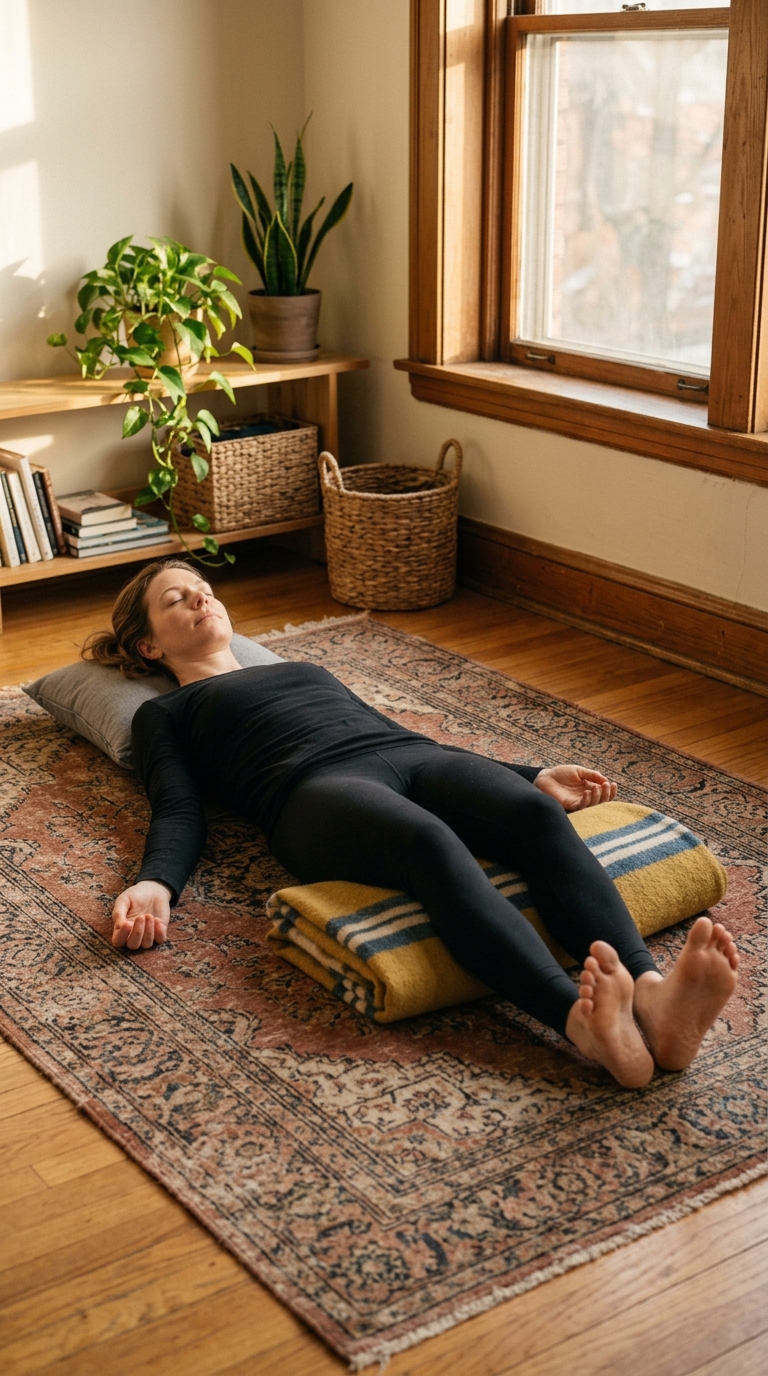
It is not recommended in the evening. Kapalabhati stimulates sympathetic alertness and abdominal tone; evening practice is better served by slow extended-exhale breathing, Bhramari (humming breath), or Yoga Nidra.
Why does my lower back get tired during Kapalabhati?
Sitting flat on the floor with tight hips tilts the pelvis backward, forcing the lumbar muscles to work just to hold you upright while the abdomen contracts. Sit on the front edge of a firm folded blanket or bolster—or on a chair with feet flat.