Ingredients & Ayurvedic Properties
| Ingredient | Weight | Ayurvedic Profile |
|---|---|---|
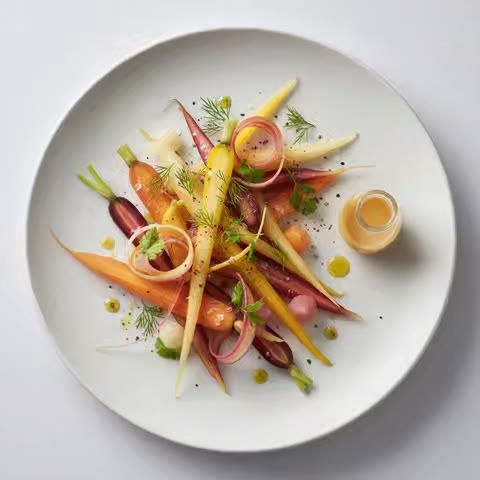 Carrot, cut into long batons | 150 g | Sweet, Bitter · Heating |
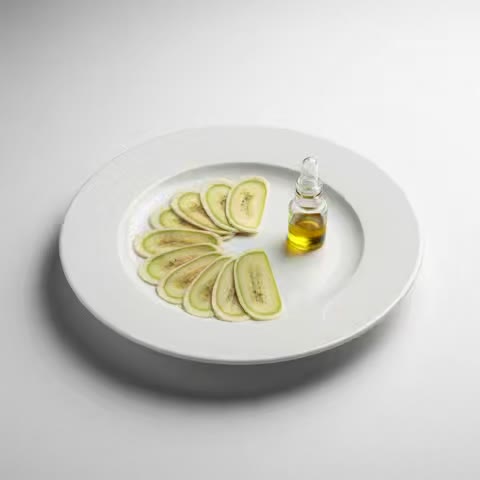 Green plantain, peeled and cut long | 180 g | Sweet, Astringent · Cooling |
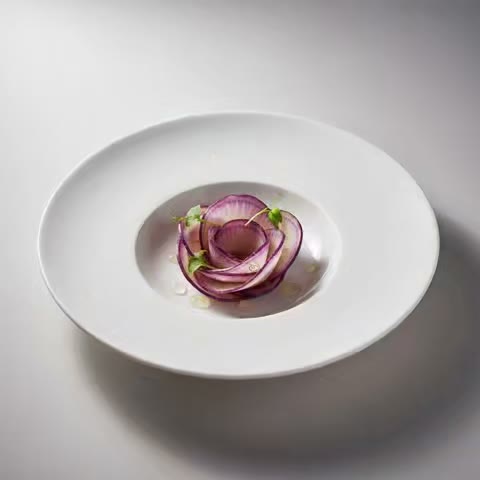 Yam, peeled and cut into sticks | 180 g | Sweet · Cooling |
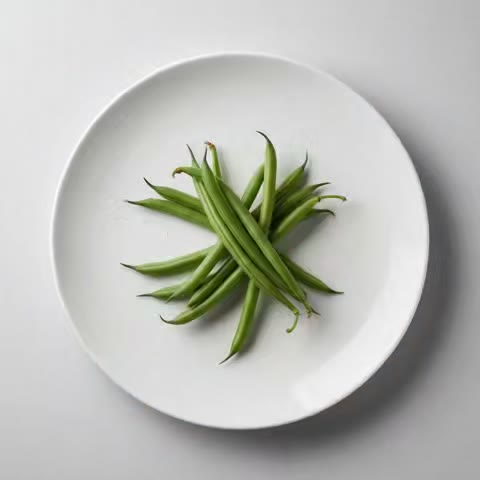 Green beans, halved crosswise | 120 g | Sweet, Astringent · Cooling |
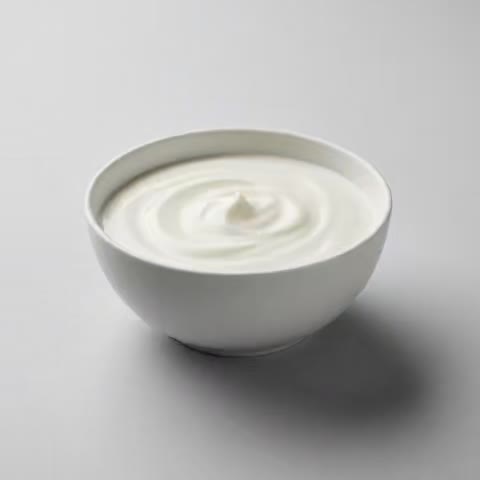 Whole-milk yogurt, whisked smooth | 140 g | Sour, Sweet · Heating |
 Fresh coconut, finely grated | 85 g | Sweet · Cooling |
 Cumin seeds, ground fresh | 5 g | Pungent, Bitter · Heating |
 Coconut oil, for finishing | 18 g | Sweet · Cooling |
 Curry leaves, torn | 2 g | Bitter, Pungent · Heating |
 Rock salt, finely ground | 4 g | Salty · Cooling |
| Water, freshly boiled | 450 g | Whole culinary ingredient |
Step-by-Step Preparation
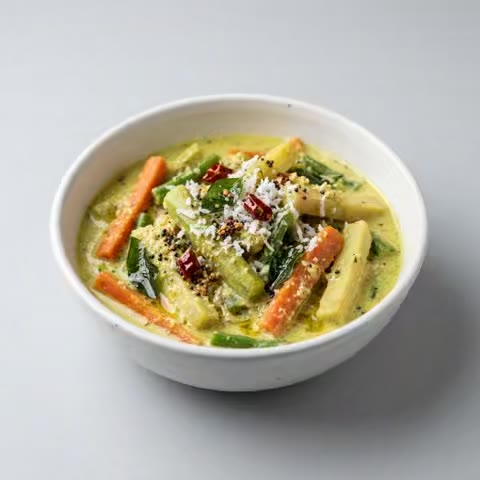
- Measure 450 ml (about 2 cups) water for Kerala Root Vegetable Avial; bring it to a full boil, then keep it covered and hot for the additions below.
- Layer the firm yam and plantain beneath the quicker-cooking carrot and beans. Keep the layer loose and even, with no pooled liquid, so every portion receives the same balance.
- Steam them with enough hot water to stay succulent. Maintain a steady steam for 4–6 minutes and check until a thin knife slides through the largest piece without resistance.
- Crush the cumin with the grated coconut, loosen the paste with cooking liquid, and ease it among the tender batons. Work in 3 short pulses, pausing between them so the mixture stays cool and retains the intended texture.
- Lower the heat before folding in the whisked yogurt. Allow 8–10 minutes at moderate heat, checking whether a thin knife slides through the largest piece without resistance.
- Warm without boiling, season. Give the spices about 30 seconds before adding the larger pieces, then continue over medium-low heat for 4–5 minutes, moving the pan often, until the raw aroma is gone.
- Finish with curry leaves and coconut oil. Leave the pan off the flame for 6 minutes, then taste and correct the final balance before serving at the stated temperature.
- Rest Kerala Root Vegetable Avial for 5 minutes covered off the burner; stir once gently, check the final consistency, and serve warm without prolonged holding.
Dosha Modifications & Seasonal Guidance
Vaidya Culinary Note (original lacto-vegetarian recipe developed for the R3 regional and practical cooking collection)
This substantial avial balances firm roots with a gently tangy coconut coating Vata: serve it warm and add a little ghee if the meal feels dry. Pitta: omit the chili and use mildly sour yogurt. Kapha: use a smaller portion and sharpen the seasoning with ginger or black pepper.
USDA Nutrition Facts for Kerala Root Vegetable Avial
| Nutrient | Per 100g | Per Serving (1 serving (333g)) |
|---|---|---|
| Energy (Calories) | 88 kcal | 294 kcal |
| Protein | 1.3 g | 4.4 g |
| Total Carbohydrates | 12.2 g | 40.6 g |
| Dietary Fiber | 2.0 g | 6.8 g |
| Total Sugars | 2.0 g | 6.8 g |
| Total Fat | 4.1 g | 13.7 g |
| Calcium | 29.7 mg | 98.9 mg |
| Iron | 0.71 mg | 2.37 mg |
| Magnesium | 16.9 mg | 56.5 mg |
| Phosphorus | 38.7 mg | 129.1 mg |
| Potassium | 270 mg | 902 mg |
| Sodium | 134 mg | 446 mg |
| Zinc | 0.24 mg | 0.81 mg |
| Copper | 0.09 mg | 0.29 mg |
| Manganese | 0.12 mg | 0.39 mg |
| Selenium | 1.1 µg | 3.5 µg |
| Vitamin C | 7.1 mg | 23.7 mg |
| Vitamin A (RAE) | 103.4 µg | 345.0 µg |
| Vitamin E | 0.25 mg | 0.84 mg |
| Vitamin K | 6.9 µg | 22.9 µg |
| Thiamin (Vitamin B1) | 0.06 mg | 0.19 mg |
| Riboflavin (Vitamin B2) | 0.06 mg | 0.21 mg |
| Niacin (Vitamin B3) | 0.39 mg | 1.31 mg |
| Vitamin B6 | 0.09 mg | 0.29 mg |
| Folate (DFE) | 10.6 µg | 35.5 µg |
| Choline | 7.1 mg | 23.6 mg |