Classical Ayurvedic Profile & Preparation
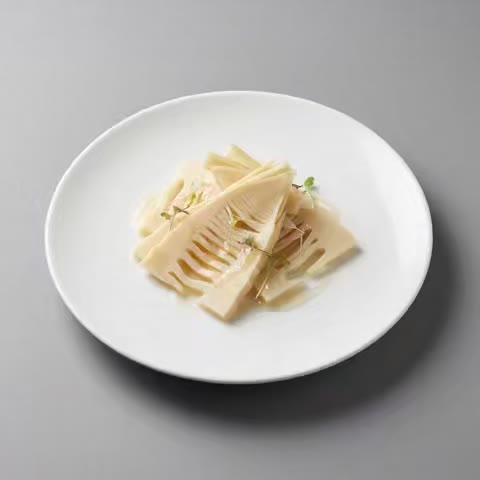
Tender bamboo (fresh, unfermented) is a traditional Ayurvedic vegetable valued for its sweet, astringent, bitter taste and cooling potency.
Traditional Preparation (Samskara)
Fresh monsoon shoots sliced and boiled in changes of water before currying — the bitterness and the toxins leave together. Distinct from the fermented sour shoot.
Classical Provenance: Western Ghats / Northeast monsoon tradition; vamsha-ankura in later nighantus.
Synergistic Combinations (Samyoga)
- boiled twice, water discarded (essential detox step)
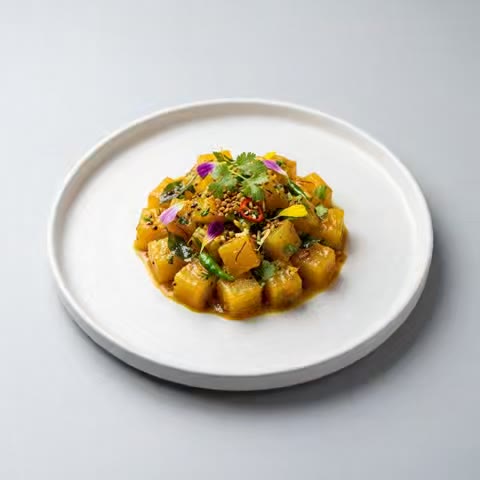
- curried with coconut (Karnataka kalale palya)
- with sesame in tribal preparations
Contraindications & Viruddha Āhāra (Food Incompatibilities)
- Contraindication: raw or single-boiled shoots (cyanogenic — always double-boil)
- Contraindication: thyroid caution with frequent intake
- Contraindication: vata excess (rough-dry fibre)
Verified USDA Nutrition Facts for Tender bamboo (fresh, unfermented)
Complete macronutrient, vitamin, and mineral profile per 100 grams and per 1 cup chopped (100g):
| Nutrient | Per 100g | Per Serving (1 cup chopped) |
|---|---|---|
| Energy (Calories) | 16 kcal | 16 kcal |
| Protein | 1.3 g | 1.3 g |
| Total Carbohydrates | 1.7 g | 1.7 g |
| Dietary Fiber | 1.6 g | 1.6 g |
| Total Sugars | 0.09 g | 0.09 g |
| Total Fat | 0.3 g | 0.3 g |
| Calcium | 10.0 mg | 10.0 mg |
| Iron | 0.33 mg | 0.33 mg |
| Magnesium | 8.3 mg | 8.3 mg |
| Phosphorus | 39.6 mg | 39.6 mg |
| Potassium | 422 mg | 422 mg |
| Sodium | 1 mg | 1 mg |
| Zinc | 0.37 mg | 0.37 mg |
| Copper | 0.14 mg | 0.14 mg |
| Manganese | 0.42 mg | 0.42 mg |
| Selenium | 2.6 µg | 2.6 µg |
| Vitamin C | 15.7 mg | 15.7 mg |
| Vitamin A (RAE) | 0 µg | 0 µg |
| Vitamin E | 0 mg | 0 mg |
| Vitamin K | 1.1 µg | 1.1 µg |
| Thiamin (Vitamin B1) | 0.06 mg | 0.06 mg |
| Riboflavin (Vitamin B2) | 0.06 mg | 0.06 mg |
| Niacin (Vitamin B3) | 0.25 mg | 0.25 mg |
| Vitamin B6 | 0.13 mg | 0.13 mg |