Classical Ayurvedic Profile & Preparation
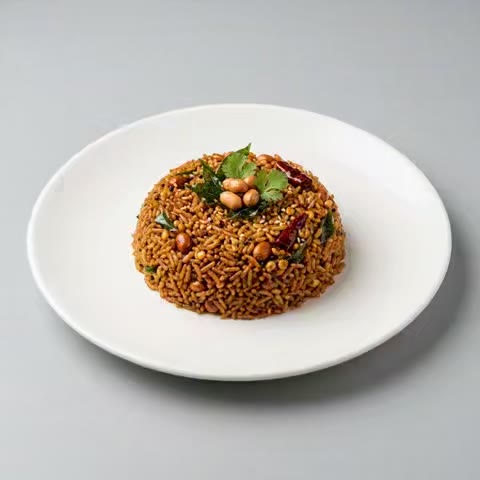
Temple prasadam of the South — the concentrated tamarind-sesame paste preserves the rice for a day's journey, the original travel meal.
Traditional Preparation (Samskara)
Rice mixed with pulikachal — tamarind simmered thick with sesame oil, chana dal, chilies and jaggery. Intense and sour; balance with a cooling curd course.
Classical Provenance: South Indian temple tradition.
Synergistic Combinations (Samyoga)
- peanuts and sesame in the pulikachal paste
- with papad or vadam
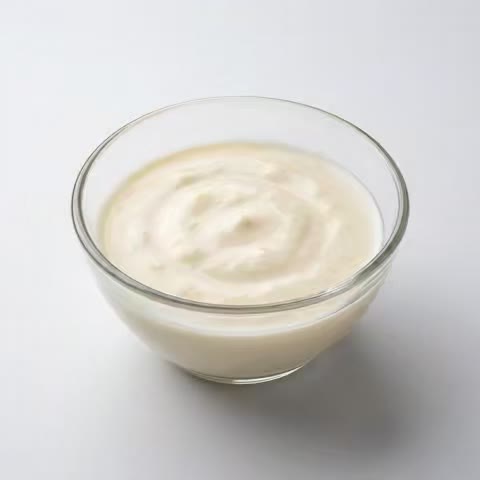
- curd rice after (traditional cooling counterpoint)
Contraindications & Viruddha Āhāra (Food Incompatibilities)
- Contraindication: amlapitta / reflux
- Contraindication: pitta excess
- Contraindication: joint inflammation aggravated by sour (folk caution)
Verified USDA Nutrition Facts for Tamarind rice (puliyodarai)
Complete macronutrient, vitamin, and mineral profile per 100 grams and per 1 cup (200g):
| Nutrient | Per 100g | Per Serving (1 cup) |
|---|---|---|
| Energy (Calories) | 131 kcal | 262 kcal |
| Protein | 2.0 g | 4.1 g |
| Total Carbohydrates | 22.0 g | 44.0 g |
| Dietary Fiber | 0.7 g | 1.4 g |
| Total Sugars | 3.5 g | 7.0 g |
| Total Fat | 3.9 g | 7.8 g |
| Calcium | 15.3 mg | 30.6 mg |
| Iron | 1.31 mg | 2.61 mg |
| Magnesium | 13.8 mg | 27.6 mg |
| Phosphorus | 36.1 mg | 72.2 mg |
| Potassium | 89 mg | 178 mg |
| Sodium | 313 mg | 626 mg |
| Zinc | 0.29 mg | 0.58 mg |
| Copper | 0.05 mg | 0.10 mg |
| Manganese | 0.22 mg | 0.44 mg |
| Selenium | 3.1 µg | 6.2 µg |
| Vitamin C | 1.1 mg | 2.1 mg |
| Vitamin A (RAE) | 0.9 µg | 1.7 µg |
| Vitamin E | 0.10 mg | 0.19 mg |
| Vitamin K | 3.8 µg | 7.6 µg |
| Thiamin (Vitamin B1) | 0.14 mg | 0.27 mg |
| Riboflavin (Vitamin B2) | 0.02 mg | 0.04 mg |
| Niacin (Vitamin B3) | 0.95 mg | 1.90 mg |
| Vitamin B6 | 0.04 mg | 0.08 mg |
| Folate (DFE) | 78.2 µg | 156.5 µg |
| Choline | 1.7 mg | 3.4 mg |