Classical Ayurvedic Profile & Preparation
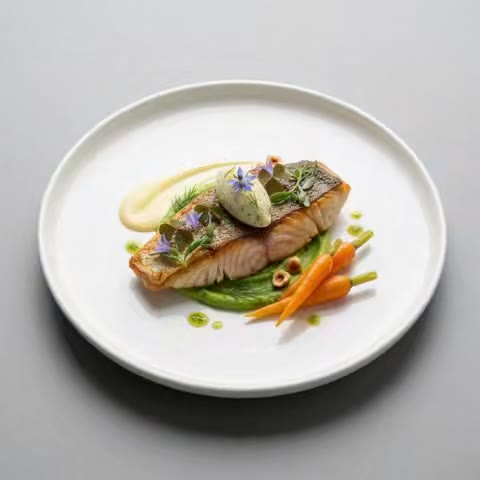
The prized oily fish of Bengal — deeply nourishing and unctuous; the richest of the common Indian fish.
Traditional Preparation (Samskara)
Its own oil is abundant — steam rather than fry; monsoon is its traditional season.
Classical Provenance: Regional Bengali tradition; matsya class.
Synergistic Combinations (Samyoga)
- steamed (bhapa) with minimal oil
- traditional mustard preparations (pitta caution)
Contraindications & Viruddha Āhāra (Food Incompatibilities)
- Contraindication: fish allergy
- Contraindication: kapha excess, obesity
- Contraindication: high pitta (mustard-heavy preparations)
- Incompatible pairing (Viruddha): with milk (classical fish-milk viruddha)
Verified USDA Nutrition Facts for Hilsa
Complete macronutrient, vitamin, and mineral profile per 100 grams and per 3 oz (85g):
| Nutrient | Per 100g | Per Serving (3 oz) |
|---|---|---|
| Energy (Calories) | 259 kcal | 220 kcal |
| Protein | 21.8 g | 18.5 g |
| Total Carbohydrates | 0 g | 0 g |
| Dietary Fiber | 0 g | 0 g |
| Total Sugars | 0 g | 0 g |
| Total Fat | 18.5 g | 15.7 g |
| Calcium | 19.8 mg | 16.8 mg |
| Iron | 1.19 mg | 1.01 mg |
| Magnesium | 30.6 mg | 26.0 mg |
| Phosphorus | 278.0 mg | 236.3 mg |
| Potassium | 341 mg | 290 mg |
| Sodium | 81 mg | 69 mg |
| Zinc | 0.64 mg | 0.54 mg |
| Copper | 0.15 mg | 0.13 mg |
| Manganese | 0.08 mg | 0.07 mg |
| Selenium | 37.6 µg | 32.0 µg |
| Vitamin C | 0 mg | 0 mg |
| Vitamin A (RAE) | 7.4 µg | 6.3 µg |
| Vitamin E | 1.35 mg | 1.15 mg |
| Vitamin K | 0.9 µg | 0.8 µg |
| Thiamin (Vitamin B1) | 0.01 mg | 0.01 mg |
| Riboflavin (Vitamin B2) | 0.04 mg | 0.03 mg |
| Niacin (Vitamin B3) | 2.85 mg | 2.42 mg |
| Vitamin B6 | 120.00 mg | 102.00 mg |