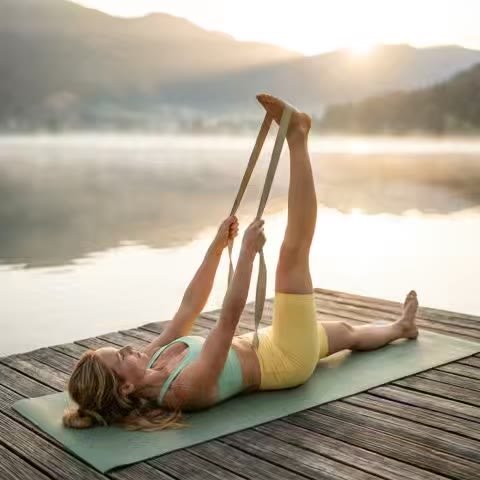
Alignment, Breath & Drishti Cues for Wind-Relieving Pose
Wind-Relieving Pose (Pavanamuktasana) belongs to the Supine posture family and engages the Abs, Lower Back, Hip Flexors at an intensity of approximately 1.6 METs. One knee drawn firmly into the chest while the other leg stays long. Named directly for its effect on trapped digestive gas.
- Breath Rhythm: Maintain Slow and even throughout the 45-second hold so nervous system tone remains steady.
- Visual Focal Point (Drishti): Direct the gaze toward Eyes closed to quiet peripheral distraction and stabilize balance.
- Primary Anatomical Focus: Concentrates mechanical load and mobility across Abs, Lower Back, Hip Flexors.
- Minimum Recommended Age: 3 years (12 months).
Ayurvedic Dosha Profile (Vāta, Pitta & Kapha)
In Ayurvedic asana sequencing (Dosha Provenance: modern-synthesis), every posture shifts Vata, Pitta, and Kapha according to its mechanical compression, heat generation, and grounding stability:
- Vāta Effect: Pacifies (-1) — pair with slow nasal breathing and unhurried transitions to prevent excess mobility or dryness.
- Pitta Effect: Pacifies (-1) — keep the jaw, temples, and abdomen soft when holding for 45 seconds.
- Kapha Effect: Neutral (0) — link into dynamic flows or longer holds when seeking metabolic stimulation.
Contraindications & Safety Precautions
No specific classical contraindications recorded for healthy adults; always practice within pain-free range of motion.