Ingredients & Ayurvedic Properties
| Ingredient | Weight | Ayurvedic Profile |
|---|---|---|
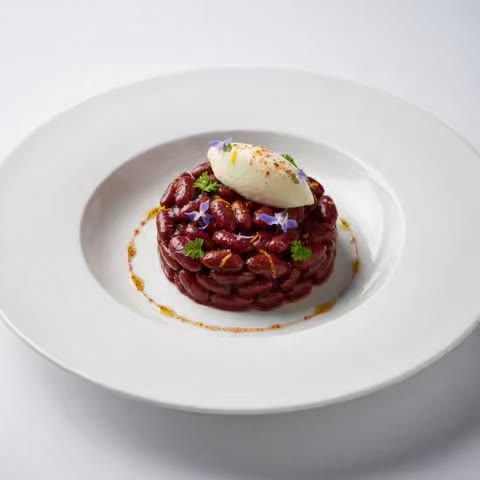 Kidney beans, soaked overnight and drained | 280 g | Sweet, Astringent · Cooling |
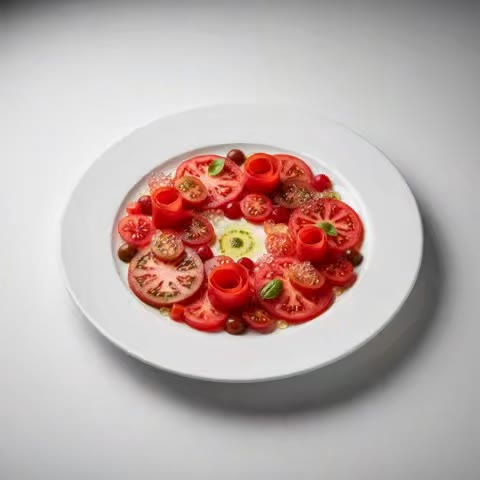 Tomatoes, finely chopped | 300 g | Sour, Sweet · Heating |
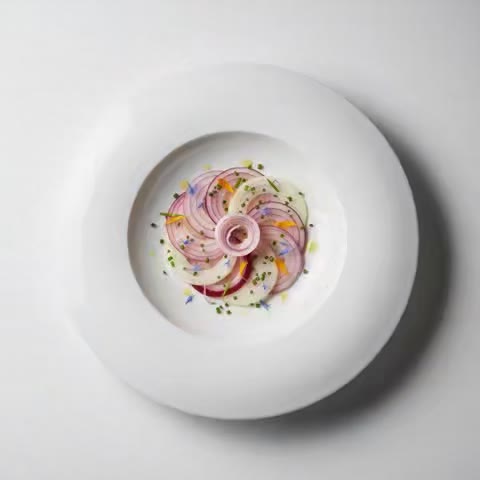 Onions, finely diced | 200 g | Sweet, Pungent · Heating |
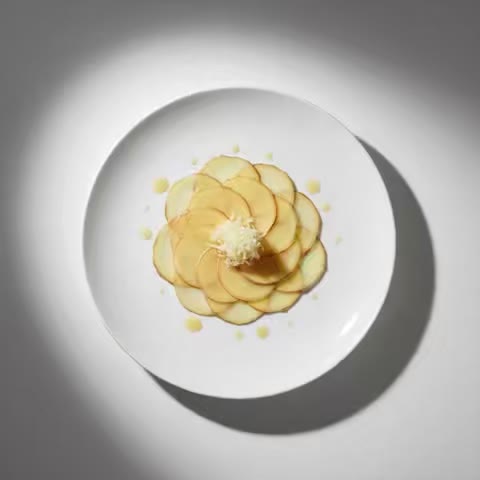 Fresh ginger, finely grated | 10 g | Pungent · Heating |
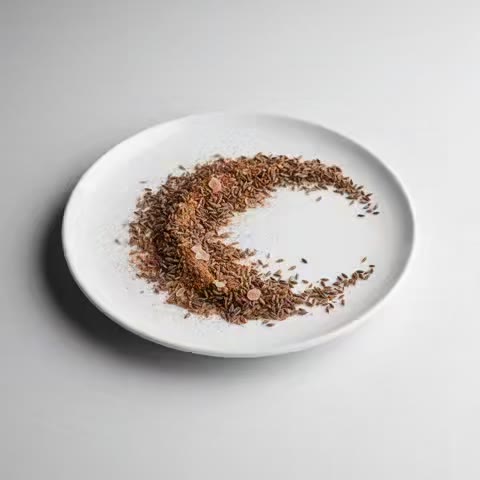 Cumin seeds, whole | 5 g | Pungent, Bitter · Heating |
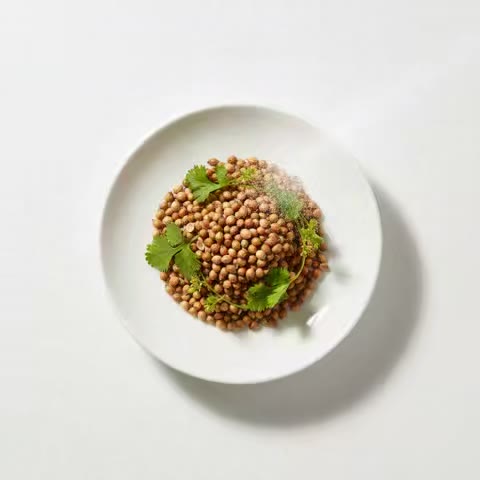 Coriander seeds, ground | 7 g | Astringent, Bitter, Sweet · Cooling |
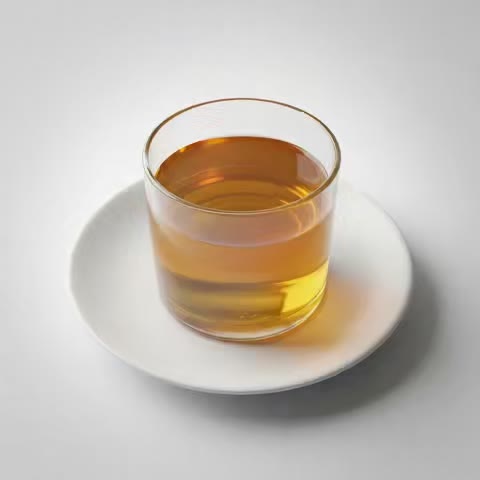 Ghee, for the pot | 20 g | Sweet · Cooling |
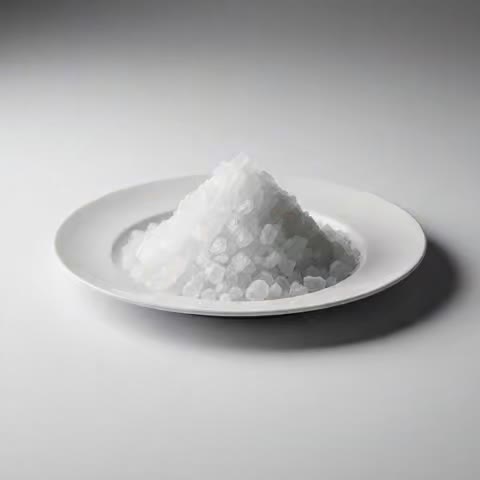 Rock salt, finely ground | 4 g | Salty · Cooling |
| Water, freshly boiled | 1150 g | Whole culinary ingredient |
Step-by-Step Preparation
- Measure 1150 ml (about 4 3/4 cups) water for Punjabi Slow-Cooked Rajma; bring it to a full boil, then keep it covered and hot for the additions below.
- Cover the kidney beans with at least three times its volume of cool water and soak for 8–12 hours; drain for 2 minutes before the first heated step.
- Simmer the soaked kidney beans until their skins are supple and their centers mash without resistance. Use a pressure cooker at steady pressure for 25–30 minutes, or keep a covered pot at a gentle simmer for 60–75 minutes, until one bean mashes completely between two fingers.
- Brown the diced onions gently in ghee, add cumin, ginger, coriander, and chopped tomatoes. Give the spices about 30 seconds before adding the larger pieces, then continue over moderate heat for 4–5 minutes, moving the pan often, until the raw aroma is gone.
- Cook the masala until cohesive. Maintain medium-low heat for 9–11 minutes, stirring every 3 minutes, until the mixture is cohesive and a thin line of fat glints at the edge.
- Fold in the beans with their broth, crush a few against the pot. Work over low heat for 4–6 minutes, folding from the bottom until the mixture is even, hot through, and no raw spice aroma remains.
- Simmer slowly until the rajma becomes velvety. Maintain low heat for 11–13 minutes, stirring every 4 minutes, until the pulses crush easily against the side of the pot.
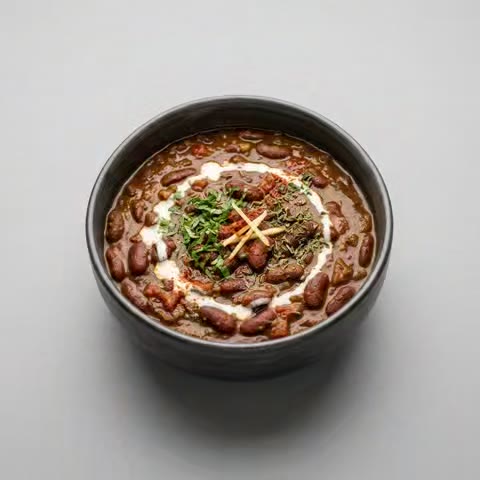
- Rest Punjabi Slow-Cooked Rajma for 5 minutes covered off the burner; stir once gently, check the final consistency, and serve warm without prolonged holding.
Dosha Modifications & Seasonal Guidance
Vaidya Culinary Note (original lacto-vegetarian recipe developed for the R3 regional and practical cooking collection)
Thorough soaking and long simmering are central to this rich Punjabi rajma Vata: take a small portion with ghee and soft white rice. Pitta: keep the tomato and ginger modest. Kapha: reduce ghee and accompany with bitter greens.
USDA Nutrition Facts for Punjabi Slow-Cooked Rajma
| Nutrient | Per 100g | Per Serving (1 serving (494g)) |
|---|---|---|
| Energy (Calories) | 43 kcal | 213 kcal |
| Protein | 1.5 g | 7.4 g |
| Total Carbohydrates | 4.9 g | 24.4 g |
| Dietary Fiber | 1.5 g | 7.5 g |
| Total Sugars | 0.9 g | 4.4 g |
| Total Fat | 2.2 g | 10.7 g |
| Calcium | 14.3 mg | 70.7 mg |
| Iron | 0.68 mg | 3.36 mg |
| Magnesium | 11.5 mg | 57.0 mg |
| Phosphorus | 28.2 mg | 139.3 mg |
| Potassium | 115 mg | 568 mg |
| Sodium | 113 mg | 561 mg |
| Zinc | 0.22 mg | 1.09 mg |
| Copper | 0.06 mg | 0.28 mg |
| Manganese | 0.05 mg | 0.23 mg |
| Selenium | 0.3 µg | 1.6 µg |
| Vitamin C | 3.1 mg | 15.3 mg |
| Vitamin A (RAE) | 15.0 µg | 74.3 µg |
| Vitamin E | 0.33 mg | 1.61 mg |
| Vitamin K | 3.4 µg | 16.6 µg |
| Thiamin (Vitamin B1) | 0.03 mg | 0.16 mg |
| Riboflavin (Vitamin B2) | 0.01 mg | 0.07 mg |
| Niacin (Vitamin B3) | 0.20 mg | 0.97 mg |
| Vitamin B6 | 0.04 mg | 0.20 mg |
| Folate (DFE) | 20.6 µg | 101.6 µg |
| Choline | 6.1 mg | 30.1 mg |