Ayurvedic Classical · Drink · 14 Minutes Total

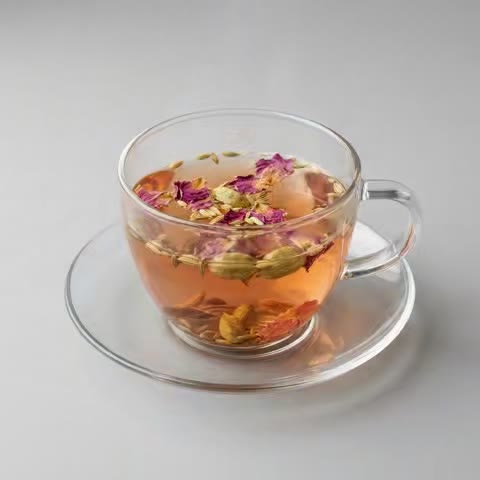
Cardamom-Rose Tea

Cardamom-Rose Tea is a mild culinary infusion, not a medicinal dose. Vata: steep gently and serve warm. Pitta: reduce strongly heating spices. Kapha: keep it unsweetened and use the full spice only if comfortable.

Add Cardamom-Rose Tea to Your Ayurvedic Meal Plan on iPhone & iPad Automatically scale servings, generate shopping lists, and track Vata/Pitta/Kapha balance + USDA macros.
Download on the App Store
Cardamom-Rose Tea — Traditional Ayurvedic Classical Recipe

Cardamom-Rose Tea — 14 minutes (5m prep, 9m cook) · 2 servings · 3 kcal/100g (USDA).

Vāta: Pacifies (-1) Pitta: Strongly Pacifies (-2) Kapha: Pacifies (-1)
Prep Time
5 mins
Cook Time
9 mins
Servings
2 (284g / serving)
Calories (per 100g)
3 kcal
Best Seasons
Grishma, Sharad
Allergens
None listed

Ingredients & Ayurvedic Properties

IngredientWeightAyurvedic Profile
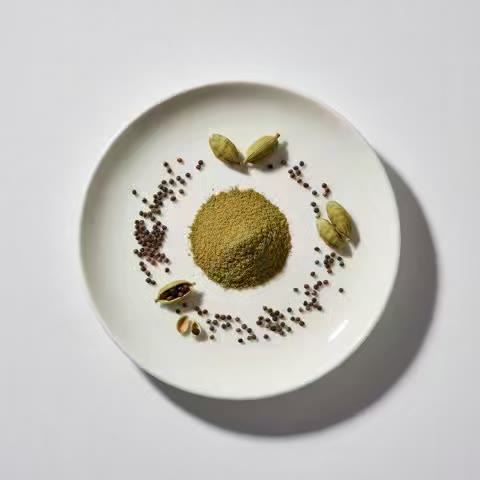
Green cardamomGreen cardamom2 gSweet, Pungent · Cooling
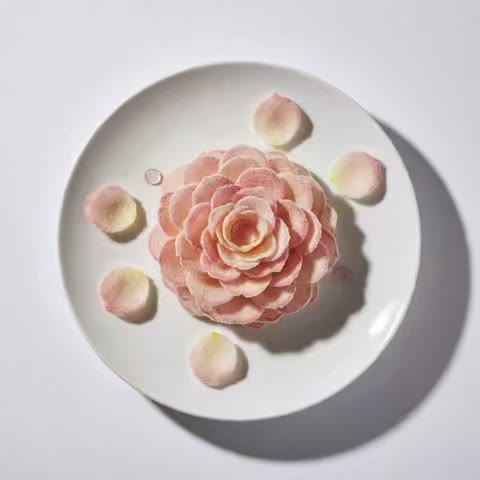
Dried rose petalsDried rose petals3 gSweet, Astringent, Bitter · Cooling
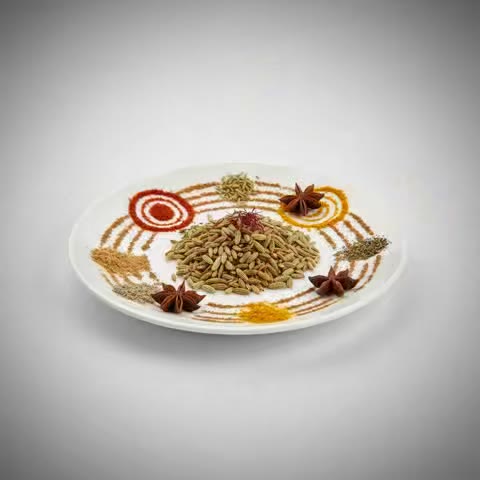
Fennel seedsFennel seeds3 gSweet, Pungent, Bitter · Cooling
Water560 gWhole culinary ingredient

Step-by-Step Preparation

  1. Bring the water just to a boil, then lower the heat.
  2. Add the green cardamom, dried rose petals, fennel seeds and simmer gently for five minutes.
  3. Cover and steep off the heat for three minutes so the aroma remains in the infusion.
  4. Strain into cups.
  5. Serve the infusion warm and unsweetened.

Dosha Modifications & Seasonal Guidance

Vaidya Culinary Note (Ayurvedic household herbal-infusion tradition)

Cardamom-Rose Tea is a mild culinary infusion, not a medicinal dose. Vata: steep gently and serve warm. Pitta: reduce strongly heating spices. Kapha: keep it unsweetened and use the full spice only if comfortable.

USDA Nutrition Facts for Cardamom-Rose Tea

NutrientPer 100gPer Serving (1 serving (284g))
Energy (Calories)3 kcal9 kcal
Protein0.1 g0.4 g
Total Carbohydrates0.5 g1.5 g
Dietary Fiber0.3 g0.9 g
Total Sugars0.00 g0.01 g
Total Fat0.1 g0.3 g
Calcium10.8 mg30.6 mg
Iron0.15 mg0.43 mg
Magnesium3.9 mg11.0 mg
Phosphorus3.2 mg9.1 mg
Potassium13 mg37 mg
Sodium4 mg13 mg
Zinc0.06 mg0.16 mg
Copper0.02 mg0.05 mg
Manganese0.13 mg0.38 mg
Vitamin C0.2 mg0.7 mg
Vitamin A (RAE)0.04 µg0.1 µg
Vitamin E0.01 mg0.02 mg
Vitamin K0.2 µg0.4 µg
Thiamin (Vitamin B1)0.00 mg0.01 mg
Riboflavin (Vitamin B2)0.00 mg0.01 mg
Niacin (Vitamin B3)0.04 mg0.10 mg
Vitamin B60.00 mg0.01 mg

iOS App for iPhone & iPad

Practice with 908 illustrated postures, custom prāṇāyāma timers & dosha meal plans

Combine classical Vata, Pitta, and Kapha balance, Six Tastes (Shad Rasa), and seasonal Ritucharya routines with verified USDA calorie, macronutrient, vitamin, and mineral tracking.

Related Ayurvedic Classical Recipes

Vata-Soothing Mung KitchariLunch · 53 min

Vata-Soothing Mung Kitchari

A softer texture, generous ghee, fennel, and asafoetida make this the vata-oriented version. Vata: serve very soft with

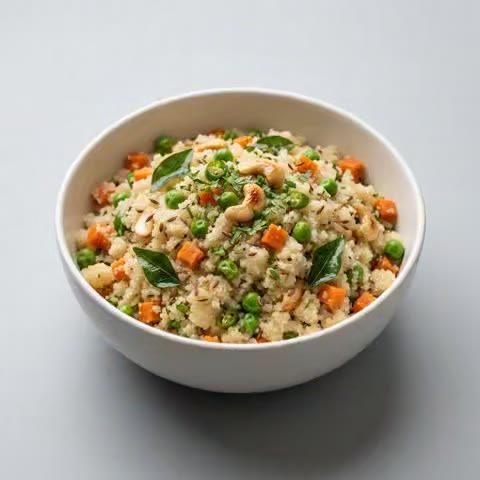
Vegetable UpmaBreakfast · 36 min

Vegetable Upma

Vegetable Upma is served freshly cooked and warm as a grain-based morning meal. Vata: make it softer and use a little ex

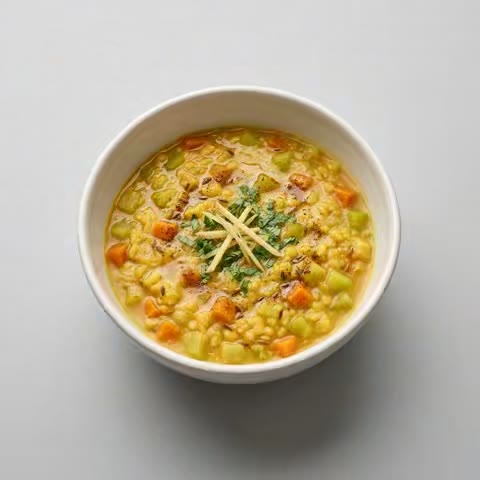
Vegetable YushaDinner · 48 min

Vegetable Yusha

Vegetable Yusha is prepared as a pourable pulse broth rather than a heavy stew. Vata: add a small spoon of ghee at the t

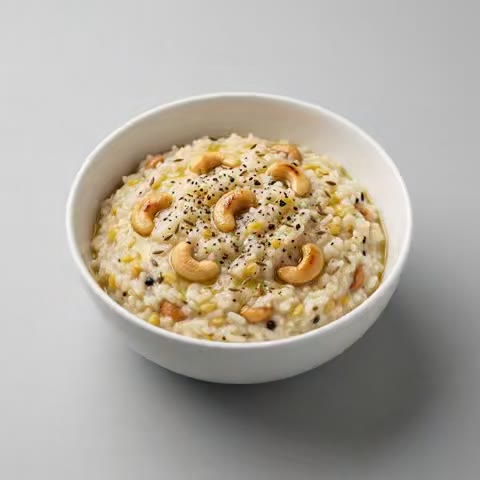
Ghee Ven PongalBreakfast · 53 min

Ghee Ven Pongal

Ghee Ven Pongal is a soft one-pot grain-and-pulse preparation suited to a freshly cooked meal. Vata: serve warm with a l

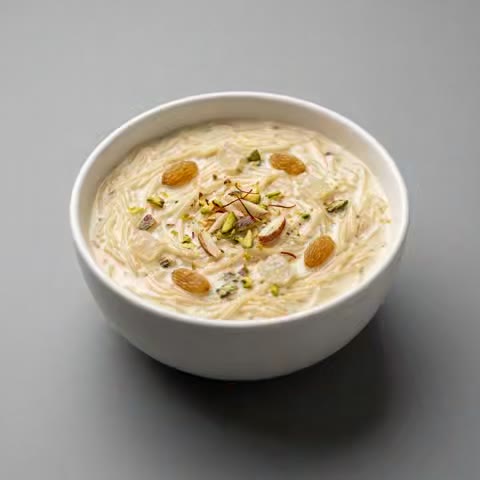
Seviyan KheerDessert · 52 min

Seviyan Kheer

Seviyan Kheer is a rich milk sweet intended as a small, freshly prepared portion. Vata: serve warm with the stated ghee.

Vermicelli UpmaBreakfast · 32 min

Vermicelli Upma

Vermicelli Upma is served freshly cooked and warm as a grain-based morning meal. Vata: make it softer and use a little e