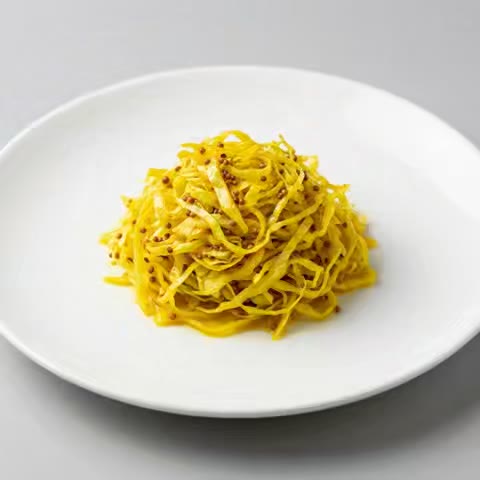
Ingredients & Ayurvedic Properties
| Ingredient | Weight | Ayurvedic Profile |
|---|---|---|
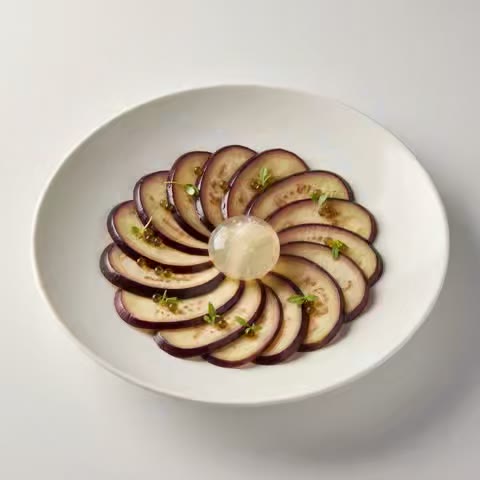 Eggplant, cut into broad wedges | 520 g | Pungent, Bitter, Sweet · Heating |
 Mustard seeds, soaked and ground | 34 g | Pungent · Heating |
 Poppy seeds, soaked and ground | 22 g | Sweet, Astringent · Cooling |
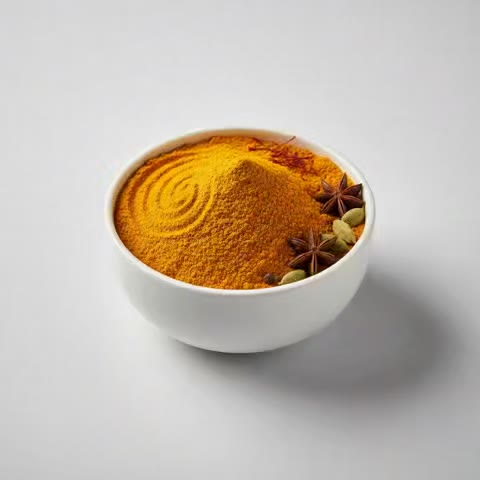 Turmeric, ground | 2 g | Bitter, Pungent, Astringent · Heating |
 Mustard oil, for the pan | 22 g | Pungent, Bitter · Heating |
 Green chili, slit lengthwise | 3 g | Pungent · Heating |
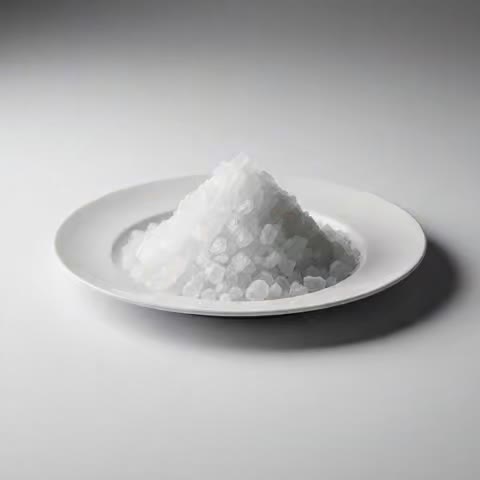 Rock salt, finely ground | 4 g | Salty · Cooling |
| Water, freshly boiled | 360 g | Whole culinary ingredient |
Step-by-Step Preparation
- Bring 360 ml (about 1 1/2 cups) water to a boil in a separate kettle and hold it hot, covered, so Bengali Mustard Eggplant never loses its simmer.
- Cover the mustard seeds and poppy seeds with at least three times their combined volume of cool water and soak for 30 minutes; drain for 2 minutes before the first heated step.
- Brown the eggplant wedges in mustard oil and turn them carefully so their skins remain attached. Give the spices about 30 seconds before adding the larger pieces, then continue over moderate heat for 4–5 minutes, moving the pan often, until the raw aroma is gone.
- Mix the ground mustard and poppy with hot water, turmeric, and salt. Mix for 2 minutes with the heat off, stopping when the seasonings are even and a pressed spoonful holds together without crumbling.
- Pour the pale sauce around the vegetables. Work over gentle medium heat for 8–10 minutes; continue once a spoon drawn across the base leaves a trail that closes slowly.
- Add the slit chili, cover until the flesh is tender, and uncover briefly to mellow the mustard without boiling it hard. Keep the pot covered over low heat for 9–11 minutes; check once at the midpoint and continue until a thin knife slides through the largest piece without resistance.
- Rest Bengali Mustard Eggplant for 5 minutes covered off the burner; stir once gently, check the final consistency, and serve warm without prolonged holding.
Dosha Modifications & Seasonal Guidance
Vaidya Culinary Note (original lacto-vegetarian recipe developed for the R3 regional and practical cooking collection)
Mustard gives this Bengali eggplant curry a penetrating, pungent character Vata: serve it warm and add a little ghee if the meal feels dry. Pitta: omit the chili, use less mustard, and dilute the sauce generously. Kapha: use a smaller portion and sharpen the seasoning with ginger or black pepper.
USDA Nutrition Facts for Bengali Mustard Eggplant
| Nutrient | Per 100g | Per Serving (1 serving (241g)) |
|---|---|---|
| Energy (Calories) | 64 kcal | 155 kcal |
| Protein | 1.8 g | 4.4 g |
| Total Carbohydrates | 5.0 g | 12.1 g |
| Dietary Fiber | 2.5 g | 6.1 g |
| Total Sugars | 2.0 g | 4.8 g |
| Total Fat | 4.6 g | 11.1 g |
| Calcium | 48.5 mg | 117.3 mg |
| Iron | 0.70 mg | 1.70 mg |
| Magnesium | 29.3 mg | 70.9 mg |
| Phosphorus | 56.5 mg | 136.6 mg |
| Potassium | 171 mg | 413 mg |
| Sodium | 164 mg | 397 mg |
| Zinc | 0.42 mg | 1.02 mg |
| Copper | 0.11 mg | 0.27 mg |
| Manganese | 0.41 mg | 0.98 mg |
| Selenium | 7.8 µg | 18.8 µg |
| Vitamin C | 2.2 mg | 5.3 mg |
| Vitamin A (RAE) | 0.8 µg | 1.9 µg |
| Vitamin E | 0.31 mg | 0.76 mg |
| Vitamin K | 2.8 µg | 6.8 µg |
| Thiamin (Vitamin B1) | 0.06 mg | 0.14 mg |
| Riboflavin (Vitamin B2) | 0.03 mg | 0.08 mg |
| Niacin (Vitamin B3) | 0.50 mg | 1.20 mg |
| Vitamin B6 | 0.07 mg | 0.16 mg |
| Folate (DFE) | 19.5 µg | 47.2 µg |
| Choline | 9.8 mg | 23.7 mg |