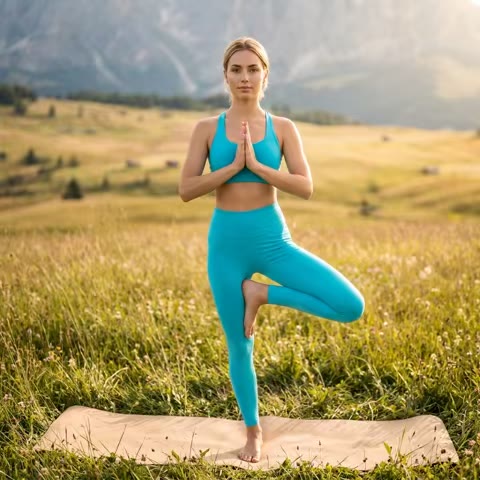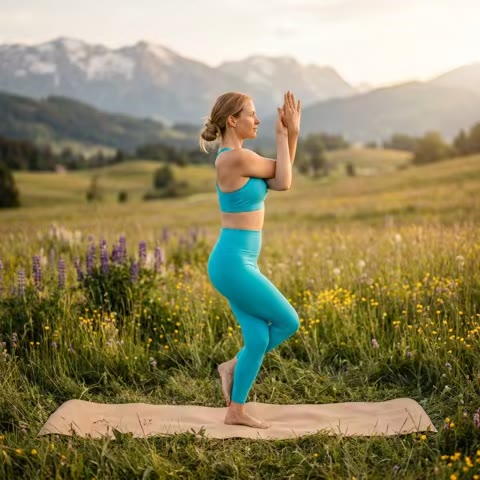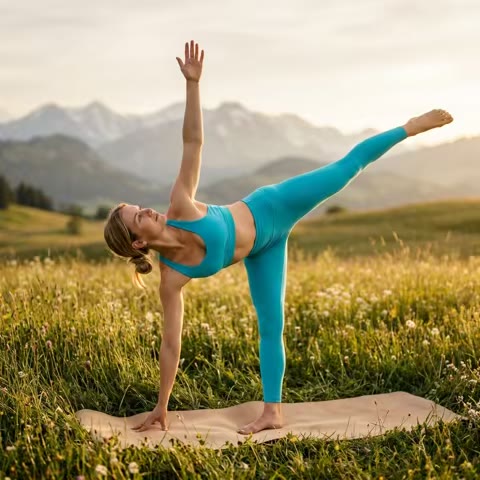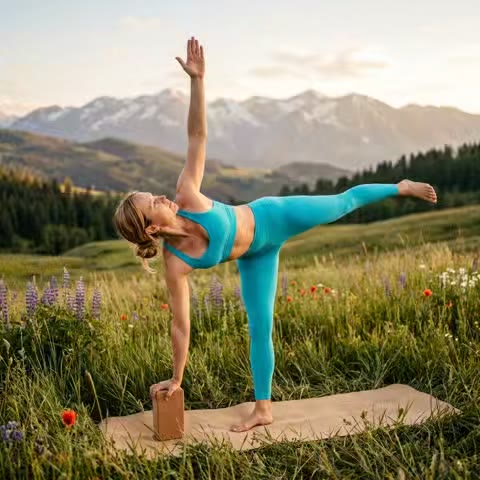
Alignment, Breath & Drishti Cues for Trivikramasana
Trivikramasana (Trivikramasana) belongs to the Standing Balance posture family and engages the Hamstrings, Inner Thighs, Glutes at an intensity of approximately 4.2 METs. A standing split held vertically with one leg raised straight up beside the ear.
- Breath Rhythm: Maintain Even ujjayi throughout the 15-second hold so nervous system tone remains steady.
- Visual Focal Point (Drishti): Direct the gaze toward Upward to quiet peripheral distraction and stabilize balance.
- Primary Anatomical Focus: Concentrates mechanical load and mobility across Hamstrings, Inner Thighs, Glutes.
- Minimum Recommended Age: 20 years (240 months).
Ayurvedic Dosha Profile (Vāta, Pitta & Kapha)
In Ayurvedic asana sequencing (Dosha Provenance: modern-synthesis), every posture shifts Vata, Pitta, and Kapha according to its mechanical compression, heat generation, and grounding stability:
- Vāta Effect: Neutral (0) — pair with slow nasal breathing and unhurried transitions to prevent excess mobility or dryness.
- Pitta Effect: Neutral (0) — keep the jaw, temples, and abdomen soft when holding for 15 seconds.
- Kapha Effect: Pacifies (-1) — link into dynamic flows or longer holds when seeking metabolic stimulation.
Contraindications & Safety Precautions
- Hamstring strain
- Balance disorders