Arm Balance Asana · Intermediate (Level 3) · Catalog #800133

Peacock Pose Mayurasana

Balanced horizontally on the elbows pressed into the belly. Classically said to digest even the most difficult food, and brutal on the wrists.

Practice Peacock Pose (Mayurasana) with Illustrated Cues & Breath Timer Open this posture in Ayurveda & Asana Yoga on iPhone & iPad to build custom dosha sequences and track MET energy burn.
Download on the App Store
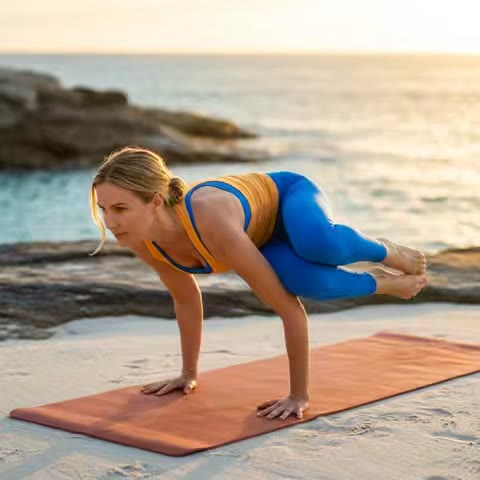
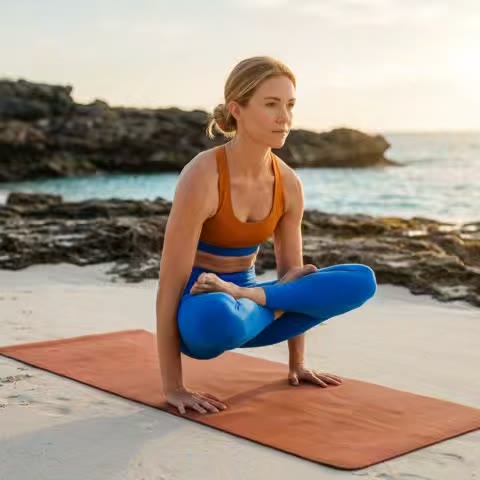
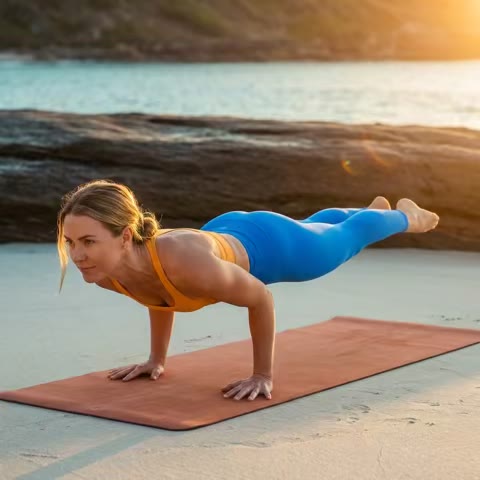
Peacock Pose (Mayurasana) — Arm Balance Yoga Posture Illustration

Peacock Pose (Mayurasana) — Arm Balance posture targeting Forearms, Abs, Triceps, Back · Even ujjayi breath · Forward drishti.

Vāta: Neutral (0) Pitta: Mildly Increases (+1) Kapha: Pacifies (-1)
Sanskrit Name
Mayurasana
Posture Family
Arm Balance
Difficulty
Intermediate (Level 3)
Recommended Hold
12 seconds
Breath Pattern
Even ujjayi
Drishti (Gaze)
Forward
Target Muscles
Forearms, Abs, Triceps, Back
Energy Expenditure
4.8 METs

Alignment, Breath & Drishti Cues for Peacock Pose

Peacock Pose (Mayurasana) belongs to the Arm Balance posture family and engages the Forearms, Abs, Triceps, Back at an intensity of approximately 4.8 METs. Balanced horizontally on the elbows pressed into the belly. Classically said to digest even the most difficult food, and brutal on the wrists.

  • Breath Rhythm: Maintain Even ujjayi throughout the 12-second hold so nervous system tone remains steady.
  • Visual Focal Point (Drishti): Direct the gaze toward Forward to quiet peripheral distraction and stabilize balance.
  • Primary Anatomical Focus: Concentrates mechanical load and mobility across Forearms, Abs, Triceps, Back.
  • Minimum Recommended Age: 15 years (180 months).

Ayurvedic Dosha Profile (Vāta, Pitta & Kapha)

In Ayurvedic asana sequencing (Dosha Provenance: modern-synthesis), every posture shifts Vata, Pitta, and Kapha according to its mechanical compression, heat generation, and grounding stability:

  • Vāta Effect: Neutral (0) — pair with slow nasal breathing and unhurried transitions to prevent excess mobility or dryness.
  • Pitta Effect: Mildly Increases (+1) — keep the jaw, temples, and abdomen soft when holding for 12 seconds.
  • Kapha Effect: Pacifies (-1) — link into dynamic flows or longer holds when seeking metabolic stimulation.

Contraindications & Safety Precautions

  • Wrist injury
  • Hernia
  • High blood pressure

iOS App for iPhone & iPad

Practice with 908 illustrated postures, custom prāṇāyāma timers & dosha meal plans

Combine classical Vata, Pitta, and Kapha balance, Six Tastes (Shad Rasa), and seasonal Ritucharya routines with verified USDA calorie, macronutrient, vitamin, and mineral tracking.

Related Arm Balance Yoga Poses

Side Crow (Parsva Bakasana)Arm Balance · Level 3

Side Crow (Parsva Bakasana)

A twisted arm balance with both knees resting on one upper arm. Rotation and balance combined, and a common gateway to the harder balances.

Eight-Angle Pose (Astavakrasana)Arm Balance · Level 3

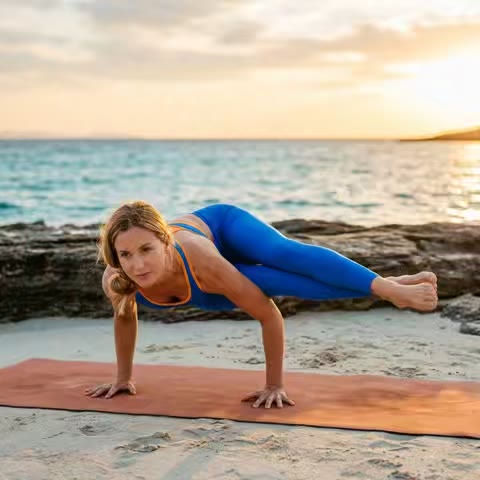
Eight-Angle Pose (Astavakrasana)

Legs threaded around one arm and extended sideways while the elbows bend. Named for the sage born with eight bends in his body.

Firefly Pose (Tittibhasana)Arm Balance · Level 3

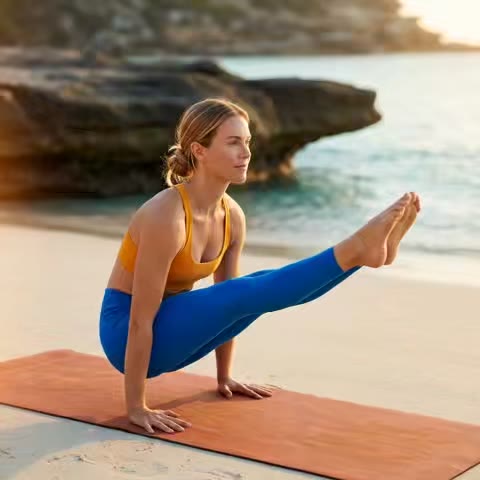
Firefly Pose (Tittibhasana)

Seated on the hands with both legs extending forward and up. Requires open hamstrings as much as arm strength.

Flying Pigeon (Eka Pada Galavasana)Arm Balance · Level 3

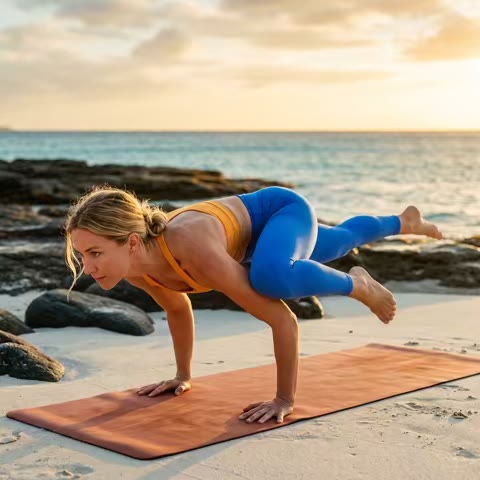
Flying Pigeon (Eka Pada Galavasana)

One shin hooked across the upper arms with the other leg extending straight back. A hip opener and an arm balance at the same time.

Scale Pose (Tolasana)Arm Balance · Level 3

Scale Pose (Tolasana)

Lifting the whole lotus-seated body clear of the floor. A pure strength lift with no momentum available.