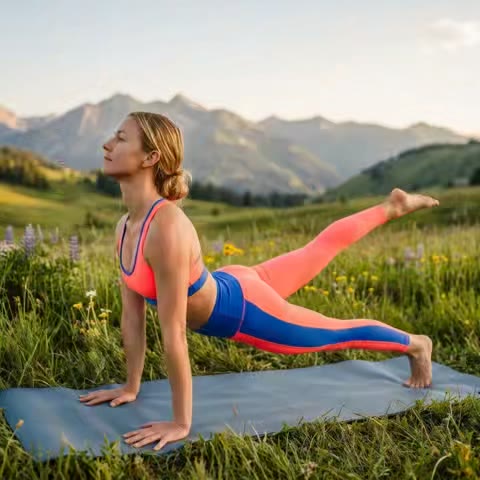
Alignment, Breath & Drishti Cues for One-Legged Chaturanga to Upward Dog
One-Legged Chaturanga to Upward Dog (Eka Pada Vinyasa transition) belongs to the Core posture family and engages the Triceps, Chest, Shoulders, Back, Glutes, Abs at an intensity of approximately 5.0 METs. Chaturanga to Upward Dog with one leg lifted. Halving the base doubles the demand on the supporting side and exposes any left-to-right imbalance immediately.
- Breath Rhythm: Maintain Exhale then inhale throughout the 10-second hold so nervous system tone remains steady.
- Visual Focal Point (Drishti): Direct the gaze toward Forward to quiet peripheral distraction and stabilize balance.
- Primary Anatomical Focus: Concentrates mechanical load and mobility across Triceps, Chest, Shoulders, Back, Glutes, Abs.
- Minimum Recommended Age: 8 years (96 months).
Ayurvedic Dosha Profile (Vāta, Pitta & Kapha)
In Ayurvedic asana sequencing (Dosha Provenance: modern-synthesis), every posture shifts Vata, Pitta, and Kapha according to its mechanical compression, heat generation, and grounding stability:
- Vāta Effect: Neutral (0) — pair with slow nasal breathing and unhurried transitions to prevent excess mobility or dryness.
- Pitta Effect: Mildly Increases (+1) — keep the jaw, temples, and abdomen soft when holding for 10 seconds.
- Kapha Effect: Pacifies (-1) — link into dynamic flows or longer holds when seeking metabolic stimulation.
Contraindications & Safety Precautions
- Wrist injury
- Shoulder injury
- Balance disorders