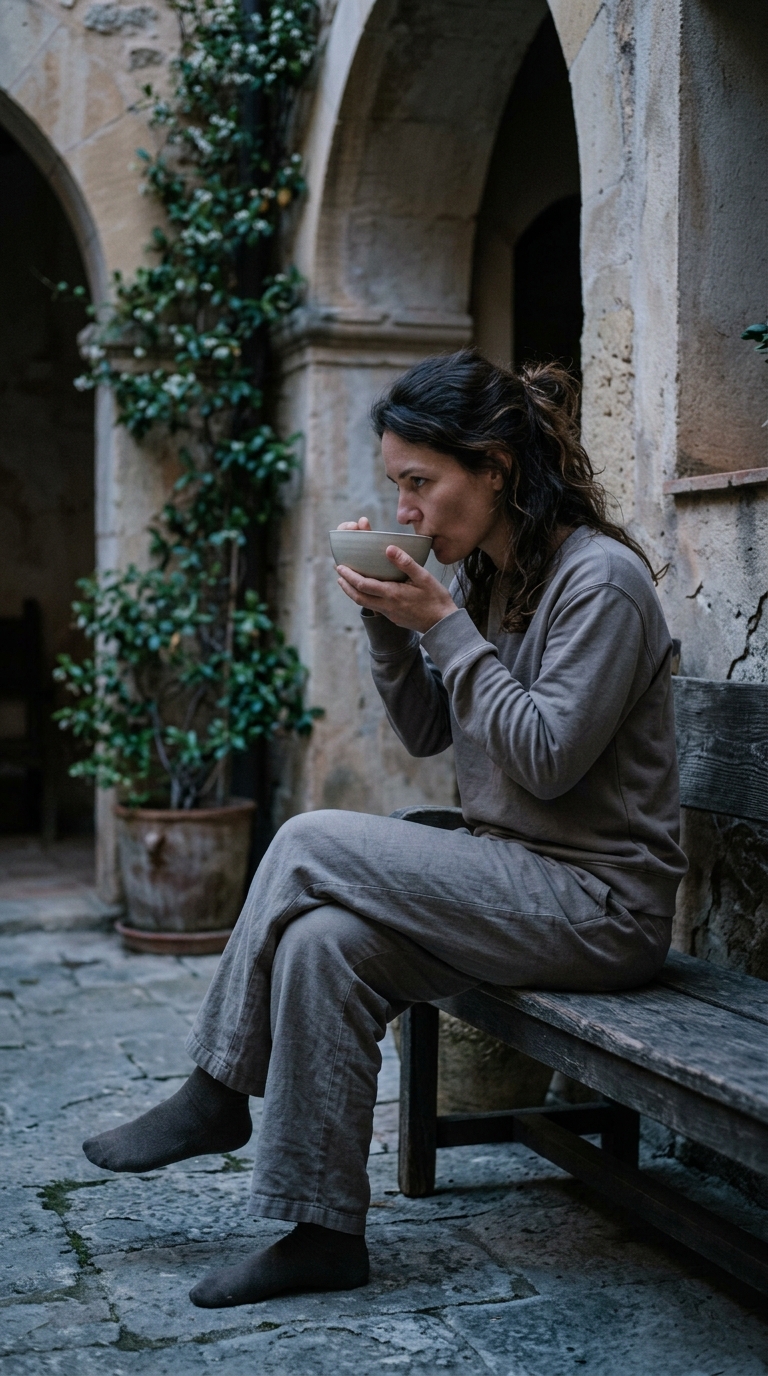
Open almost any classical Ayurvedic text on dietetics and you will find rock salt—Saindhava Lavana, mined from ancient inland salt deposits in the Sindh and Punjab Himalayan region—singled out as the preferred culinary salt. Today, coarse and fine pink Himalayan rock salt is a staple in Ayurvedic pantries around the world.
At the same time, modern wellness marketing frequently exaggerates what rock salt can do, claiming that pink salt is "low sodium" or that its trace minerals replace the need for dietary iodine. Looking at the Charaka Samhita alongside modern sodium and iodine nutrition data clears up both misunderstandings.
What the Charaka Samhita actually says about Saindhava (rock salt)
In the Charaka Samhita (Sutra Sthana 27l, Aharayogi Varga, verses 300–304), five main culinary salts are compared: rock salt (Saindhava), black/aromatic salt (Sauvarchala / kala namak), Bida salt, efflorescence salt (Audbhida), and sea salt (Samudra). Verse 300 describes rock salt as the best among salts: appetizing, digestive-stimulating, non-irritating, comparatively milder in heat than other salts, and traditionally considered helpful for all three doshas when used in normal culinary moderation.
Meanwhile, Sutra Sthana 26 explicitly warns against excessive habitual use of the salty taste (lavana rasa) from any source, noting that over-salting food aggravates Pitta and blood conditions. In other words, classical Ayurveda’s praise of Saindhava is a comparison among traditional salts, not an invitation to eat unlimited salt.
Sodium reality check: Rock salt is ~98% sodium chloride by weight
Chemically, both mined rock salt (pink Himalayan salt / sendha namak) and standard table salt are composed of roughly 97 to 99 percent sodium chloride (which is about 40 percent sodium and 60 percent chloride by weight). While pink rock salt owes its rose tint to tiny trace amounts of iron oxide and contains minute specks of potassium, magnesium and calcium, those trace minerals exist in parts-per-million quantities too small to make a meaningful dent in daily adult mineral requirements.
According to the Harvard T.H. Chan School of Public Health Nutrition Source, the adult Chronic Disease Risk Reduction (CDRR) upper guideline for sodium is 2,300 mg per day (with an Adequate Intake of 1,500 mg/day). Why does 1 teaspoon of pink Himalayan salt list slightly less sodium (around 2,200 mg) than 1 teaspoon of fine iodized table salt (around 2,300 mg), and why do coarse salts list 1,560 to 1,920 mg per teaspoon? Because larger crystals leave more air space in a measuring spoon—not because the salt itself is low-sodium.
The critical nutritional blind spot: Unfortified rock salt lacks iodine
The most important practical difference between plain mined rock salt (Saindhava) and iodized table salt is iodine. According to the Linus Pauling Institute Micronutrient Information Center, iodine is an essential component of thyroid hormones required for metabolism and—most critically during pregnancy, lactation and infancy—normal fetal and infant brain development. The adult RDA for iodine is 150 micrograms (mcg) per day, rising to 220 mcg/day during pregnancy and 290 mcg/day while breastfeeding.
Because inland soil and crops in many regions are naturally low in iodine, more than 140 countries fortify table salt with iodine to prevent iodine deficiency and hypothyroidism. Unfortified pink Himalayan rock salt, kosher salt and unfortified sea salt provide virtually no reliable dietary iodine. Furthermore, vegetarian and vegan diets exclude seafood (the richest natural food source of iodine) and, if vegan, also exclude dairy and eggs.
- Protecting iodine status: The Linus Pauling Institute notes that diets excluding iodized salt, fish, dairy and seaweed contain very little iodine, and that the American Thyroid Association recommends a daily supplement containing 150 mcg of potassium iodide for women planning pregnancy, during pregnancy (toward a 250 mcg total daily goal; RDA 220 mcg) and while breastfeeding (RDA 290 mcg). If you season food primarily with unfortified rock salt, discuss your dietary iodine sources with your clinician.
Sources & Classical References
- Charaka Samhita: Sutra Sthana 27l — Articles Used in Cooked Foods (Aharayogi) — Verses 300–304 compare rock salt (Saindhava), Sanchal salt, Bida salt and sea salt in classical Ayurvedic dietetics. Cited for historical tradition, not sodium or iodine nutrition.
- Harvard T.H. Chan School of Public Health: Salt and Sodium — Details sodium composition (40% sodium, 60% chloride), adult AI (1,500 mg) and CDRR (2,300 mg) limits, and sodium per teaspoon across fine iodized salt (2,300 mg), pink Himalayan salt (2,200 mg) and coarse salts.
- Linus Pauling Institute: Iodine — Explains thyroid hormone requirements for iodine, adult (150 mcg), pregnancy (220 mcg) and lactation (290 mcg) RDAs, and the role of iodized salt in preventing deficiency.